





AI marketing automation is changing fast, and 2026 is shaping up to be the year businesses stop experimenting and start building it into how they operate. According to a SurveyMonkey report, 88% of marketers now report using AI in their day-to-day roles, yet most organizations are still running isolated experiments rather than embedding it into core workflows.
In this article, you will find the key trends shaping AI marketing automation in 2026, what they mean for businesses with lean marketing teams, and how to identify where automation would have the most impact.
Key Takeaways
- Marketing automation is shifting from fixed rules to adaptive systems that respond to prospect behavior in real time
- First-party data has become the foundation of effective AI marketing, replacing reliance on third-party sources
- AI agents are beginning to handle entire marketing workflows autonomously, reducing the need for manual campaign management
- Businesses that automate smarter rather than simply automating more will see the most returns in 2026
Why 2026 Is a Turning Point for AI Marketing Automation
Think about how most marketing automation has worked until now. A prospect fills out a form, and they get an email. They open it, and they get a follow-up three days later. Same sequence, same timing, every time, whether they were interested or not.
AI changes that. Systems now read behavioral signals in real time and adjust accordingly, producing outreach that responds to what a prospect does rather than what a marketer assumed they would do when building the workflow months earlier.
The investment behind this shift is significant. The global AI marketing market reached $47.32 billion in 2025 and is projected to reach $107.5 billion by 2028, growing at 36.6% annually.
What that growth reflects is that capabilities once limited to enterprise marketing teams with dedicated operations staff are becoming accessible to businesses of any size, at a fraction of the cost.
7 AI Marketing Automation Trends to Watch in 2026
The trends below show where AI marketing automation is heading and what each one means for a business running a lean marketing operation.
1. From Scheduled Workflows to Adaptive Systems
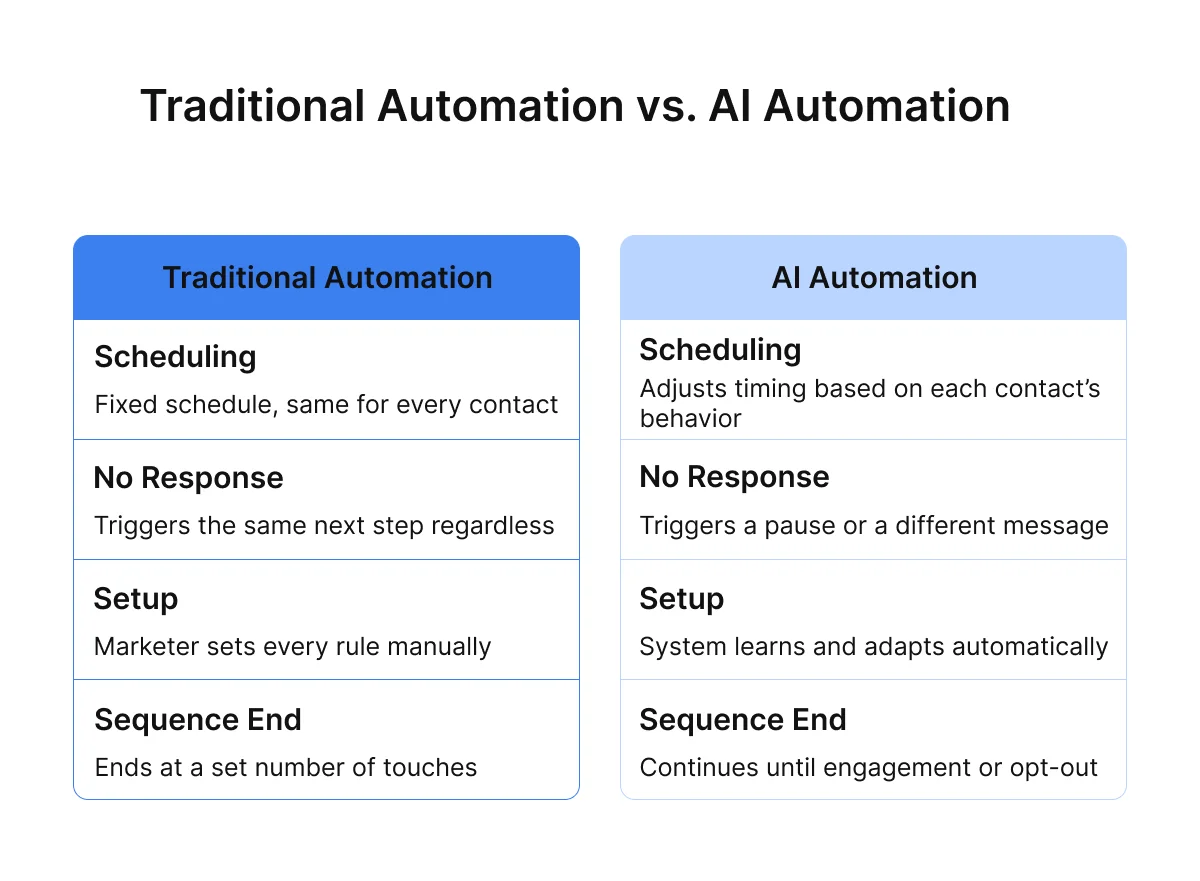
Most marketing automation still runs on fixed logic. A contact enters a sequence and receives the same messages on the same schedule as everyone else, regardless of how they behave along the way.
AI automation replaces that fixed logic with behavioral responsiveness, changing when outreach happens and how frequently based on what each contact does. A prospect who goes quiet after the second email gets a longer pause before the next touch. One who engages repeatedly gets a faster sequence.
The system adjusts the timing based on real behavior rather than a schedule a marketer set months earlier. If you have been running the same email sequences for years, this is a meaningful shift in what automation can deliver for you.
2. AI Agents Taking Over Entire Marketing Workflows
A year ago, most marketers were using AI to help with individual tasks. In 2026, the shift is toward AI handling entire workflows, from start to finish. Gartner forecasts that 40% of enterprise applications will embed AI agents by the end of 2026, up from less than 5% in 2025.
In practice, a marketing AI agent can plan a campaign, generate content, schedule distribution across channels, monitor performance, and adjust the approach based on results. The marketer sets the objective and reviews the output. The system handles the execution in between.
Human oversight is important, especially for brand voice, accuracy, and anything that requires judgment a system cannot replicate. But the volume of manual execution is shrinking considerably.
3. First-Party Data Becomes the Foundation
If your marketing still relies heavily on purchased contact lists or third-party cookie data, you have probably already noticed the quality of your data dropping. That is not a coincidence.
If you want to get the most out of AI marketing automation, clean, organized first-party data is where it starts. Data collected directly from their audience through owned channels, website interactions, email engagement, and direct customer relationships gives AI systems the accurate inputs they need to segment, target, and personalize effectively.
Without that foundation, even the most sophisticated tool will underdeliver for you.
4. Hyper-Personalization at Scale
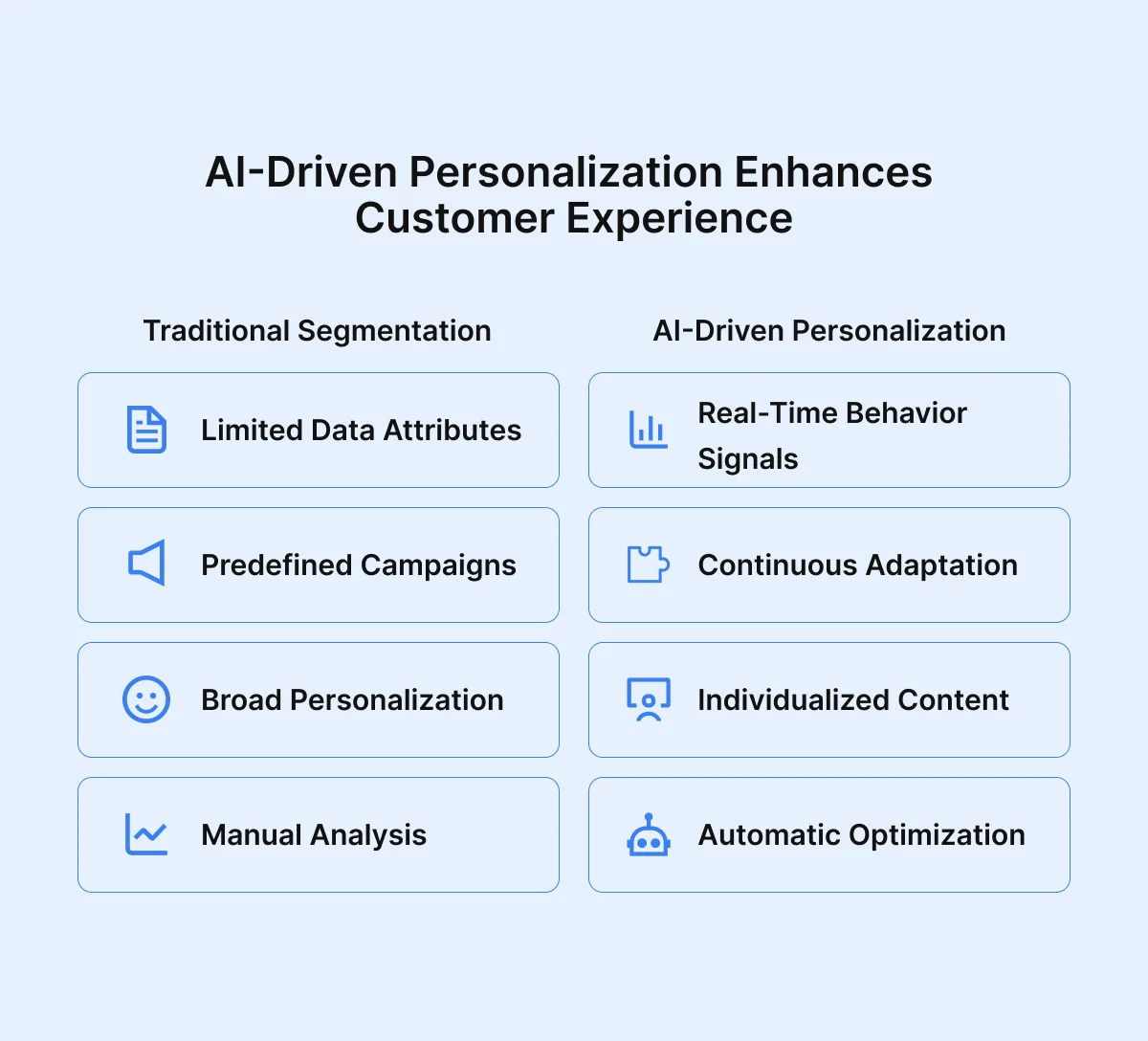
Personalization in marketing used to mean adding a first name to an email subject line. In 2026, it means delivering different content, timing, and channel combinations to different contacts based on their specific behavior and buying stage.
A prospect who downloaded a product guide three weeks ago and has not engaged since receives different content than one who visited the pricing page twice this week. The message itself changes, not just the timing.
For you as a small team, that is a genuine advantage. You can run campaigns that feel one-to-one without building everything by hand.
5. Social Media Content Automation
Social media content has historically been one of the most time-consuming recurring tasks in marketing. Writing platform-specific posts, sourcing visuals, maintaining a consistent posting schedule, and keeping the brand voice coherent across channels are difficult to sustain without a dedicated resource.
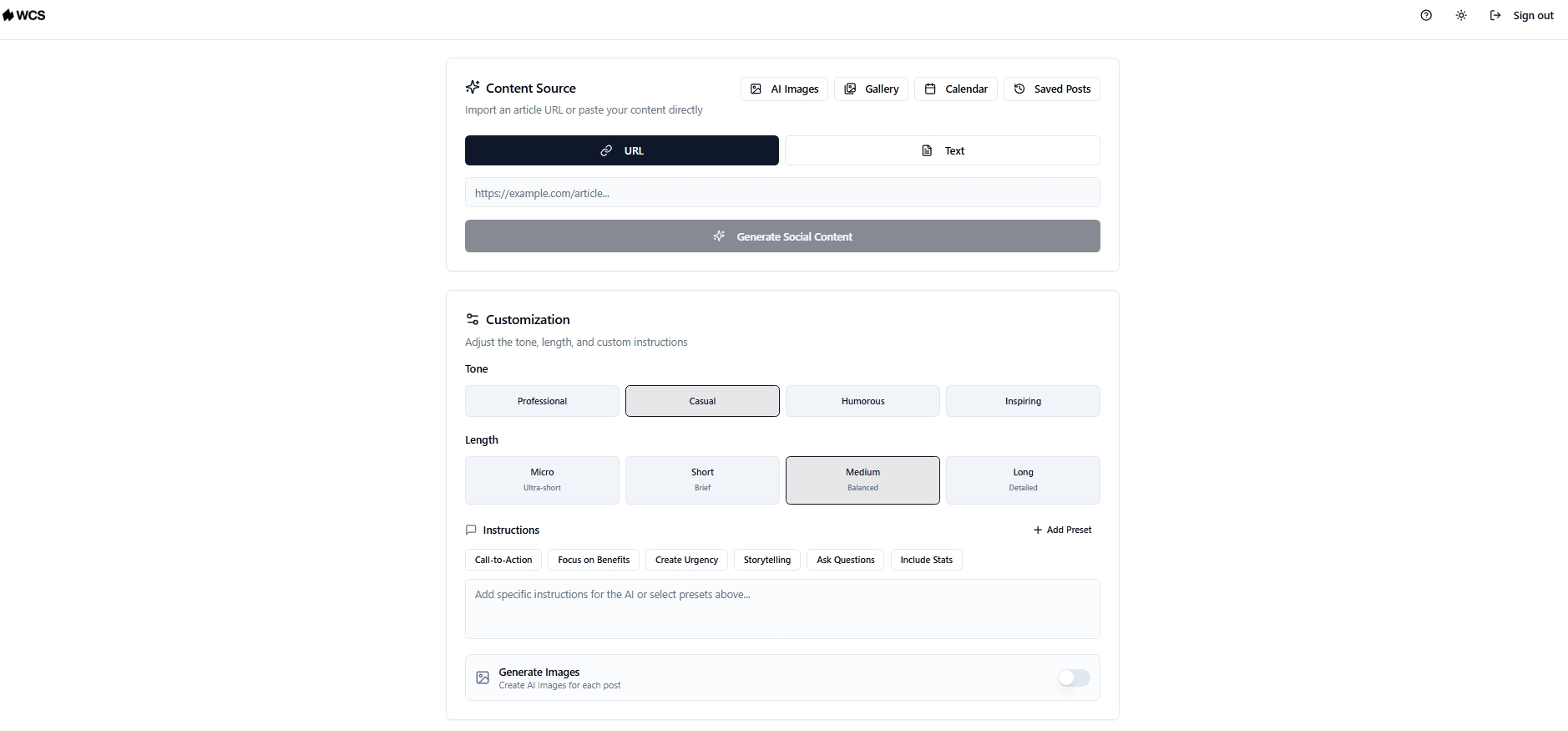
In 2026, AI systems generate branded content directly from a URL, press release, or internal document, produce platform-specific variations automatically, and maintain a consistent schedule without manual input per post.
We Capture Sales' Social AI does exactly this, turning a URL or custom text into ready-to-publish posts across Instagram, X, LinkedIn, and Facebook, with automated hashtags and AI-generated images included.
For a business posting sporadically because the team does not have time to do it consistently, this removes the bottleneck entirely.
6. Predictive Analytics Replacing Reactive Reporting
Most marketing teams are still making decisions based on last month’s numbers. By the time a problem shows up in a report, it has usually been building for weeks.
A marketing team reviewing last quarter's email performance might notice that open rates dropped. A predictive system flags that drop two weeks before it becomes a trend, identifies which segment is disengaging, and recommends an adjustment. The decision gets made proactively rather than in response to a problem that has already compounded.
Netflix has applied this logic to content and churn prediction for years, identifying which users are likely to cancel before they do and adjusting what they see accordingly. Marketing teams are now applying the same approach to campaign performance, shifting from reviewing what went wrong to anticipating it.
If your team relies on monthly performance reviews to set strategy, this is a meaningful shift in how quickly they can respond to what the market is telling them.
7. Multichannel Orchestration From a Single System
Most businesses running outreach across multiple channels are doing it with separate tools that do not talk to each other. What happens on email stays on email. What happens on SMS stays on SMS.
Unified multichannel systems change that. Every touchpoint is informed by what happened across every other channel, producing more coherent, better-timed outreach than a collection of point solutions can deliver.
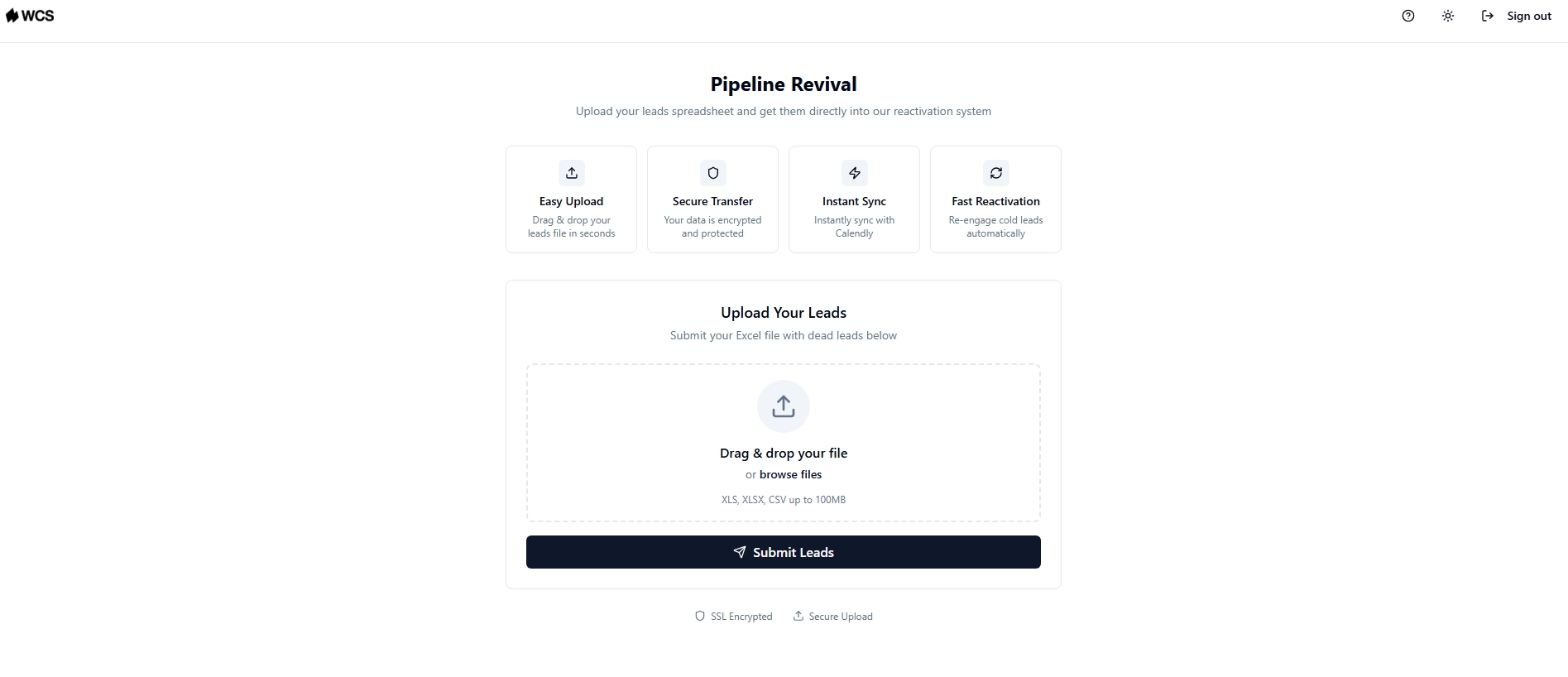
If you are re-engaging cold pipeline contacts, Pipeline Revival handles this directly, running behavior-adaptive email and SMS sequences from a single system and routing engaged prospects to a booking link or website without manual handoff.
The outcome is fewer coverage gaps, less tool switching, and a more consistent experience for the prospect, regardless of which channel they respond to.
What These Trends Mean for Your Business
Here is a quick summary of each trend and what it means in practice:
None of these trends is reserved for large companies with big marketing budgets. Most of what is covered in this article is accessible to your team right now, regardless of size or budget.
Here’s what that looks like:
- You do not need to act on all trends at once: Pick the one that addresses your biggest bottleneck and start there. For most mid-sized businesses, that is inconsistent social posting, poor follow-up on cold contacts, or outreach spread across too many disconnected tools.
- Clean data is more important than the tool you choose: Every trend in this list depends on accurate, organized contact data. If your CRM is outdated, sorting that out first will save significant time and money down the line.
- Human oversight still matters: AI handles execution well. Strategy, brand voice, and judgment still need a person behind them.
How We Capture Sales Helps Businesses Act on These Trends
Knowing the trends is one thing. Having a system that actually puts them to work for your business is another.
We Capture Sales builds private, custom AI solutions around how your team operates. Every engagement starts with a one-on-one conversation about your business before anything gets built.
Here are the features that directly connect to the AI marketing automation trends:
- Social AI: Generates branded social media content from a URL or custom text, produces platform-specific posts for Instagram, X, LinkedIn, and Facebook, and includes automated hashtags and AI-generated images. Addresses the social media content automation trend for teams that cannot maintain a consistent posting schedule manually
- Pipeline Revival: Ingests existing CRM or CSV data and runs behavior-adaptive email and SMS sequences that adjust based on how each prospect responds. Routes engaged contacts to a Calendly booking link or website. Addresses the shift to adaptive workflows and multichannel orchestration
- Market Miner: Pulls verified contact data filtered by industry and location and exports clean, structured CSV files. Addresses the first-party data trend if you’re building or refreshing your prospecting lists
Every solution runs on private, AWS-based infrastructure. Client data is never sold, shared, or used to train public AI models. Support continues after go-live as the system evolves with the business.
Not sure which of these trends applies most to your business right now?
Book a call for a free consultation and find out exactly where to start.
Frequently Asked Questions
What is AI marketing automation?
AI marketing automation uses software to plan, execute, and optimize marketing activities automatically based on real-time behavioral data. Rather than following fixed rules, the system adjusts outreach, content, and timing based on how each contact responds.
What are the email marketing trends for 2026?
The most significant shift is from fixed email sequences to behavior-adaptive ones. Instead of sending the same message to an entire list on a set schedule, AI systems send different follow-ups based on each recipient's response to the previous email.
Personalization is also moving beyond first names into message content, timing, and offer type tailored to each contact's behavior and buying stage.
What AI marketing trends should businesses prepare for in 2026?
The trends with the most practical impact for mid-sized businesses are the shift to adaptive workflows, social media content automation, and multichannel orchestration from a single system. These three directly address the bottlenecks most lean marketing teams deal with: inconsistent follow-up, unreliable social output, and outreach spread across disconnected tools.
Will AI replace marketing teams?
No, and the businesses that are proving it are the ones using AI to handle execution so their teams can focus on strategy and creative work. Automation removes repetitive tasks. The judgment, the messaging, and the direction still need human oversight.


