




AI sales automation benefits mid-sized businesses by eliminating the manual work that keeps sales teams from selling, recovering lost hours, accelerating follow-up, and generating more pipeline without adding headcount. Most sales reps spend the majority of their workday on tasks that have nothing to do with closing deals, and for a lean team, that is a significant revenue problem.
In this article, you will find AI sales automation benefits, common implementation challenges, and how to evaluate the right approach for a business of your size.
Key Takeaways
- Administrative work, not lack of effort, is the biggest drag on sales revenue for most mid-sized businesses
- AI sales automation addresses three distinct problems: finding the right prospects, following up consistently, and keeping pipeline data accurate
- Deploying automation at the wrong time or on the wrong process can make things worse, and knowing when to hold off matters as much as knowing when to move forward
- Workflow fit and ongoing support determine whether an AI implementation delivers results or gets abandoned
What AI Sales Automation Actually Does
AI sales automation uses software to handle the repeatable, time-consuming tasks that make up the majority of a sales team's day, freeing reps to focus on conversations that actually close deals.
In practice, it operates across three core areas:
- Contact research and prospecting: Automated systems identify and qualify prospects based on predefined criteria like industry, company size, and location, replacing hours of manual database work
- Outreach sequencing: Targeted emails or SMS messages go out automatically and adjust based on how a prospect responds, rather than relying on a rep to remember when and what to follow up with
- Pipeline data management: Contact records stay current, activity gets logged automatically, and sales leaders get an accurate view of where deals stand without chasing their team for updates
For small to mid-sized businesses, these are not abstract efficiency gains. They translate to more prospects contacted, fewer leads that go cold between touchpoints, and sales forecasts that reflect reality rather than best guesses.
6 AI Sales Automation Benefits That Directly Impact Revenue
Each benefit below maps to a specific revenue or efficiency problem that automation directly solves for small to mid-sized sales teams.
1. More Selling Time, Less Admin Work
Most sales reps are not spending the majority of their day selling, and the culprit is rarely laziness. Data entry, follow-up scheduling, and contact research eat through the workday before a rep gets to an actual conversation.
Automation handles those tasks in the background. In fact, 64% of sales reps save between one and five hours every week through automation. For a lean team, those recovered hours add up to more conversations and more pipeline without a single new hire.
2. Faster Lead Response and Consistent Follow-Up
Leads go cold quickly, and manual follow-up is inherently inconsistent. A rep juggling five open deals will not always remember to circle back to a prospect who went quiet three days ago.
Automated sequences fix the consistency problem. Follow-ups trigger based on prospect behavior, not a rep's availability. Every contact gets touched, on schedule, without anything slipping through. For businesses sitting on CRM data that was never properly worked, Pipeline Revival is built for exactly this: re-engaging cold leads through automated email and SMS outreach.
3. Higher Win Rates Through Better Prospect Targeting
For a small to mid-sized team with limited outreach capacity, every wasted contact attempt has a real cost. Reaching the wrong people is inefficient and pulls focus away from prospects who are actually ready to buy.
AI automation prioritizes outreach based on behavioral signals and firmographic fit, so reps spend their time on contacts most likely to convert. Early AI adopters in sales have boosted win rates by 30% or more, largely because precision-targeted outreach has replaced volume-based outreach.
4. Scalable Outreach Without Adding Headcount
Hiring more salespeople to hit a bigger number is not always an option, and for most small to mid-sized businesses, it is not the right move anyway. For most small to mid-sized businesses, the real constraint is capacity, not headcount.
Automated sequences run outreach continuously, across a full prospect list, without a rep manually managing each touchpoint. A contact who does not respond to the first message gets a follow-up. One who clicks but does not reply gets a different message. That level of coverage is impossible to maintain manually at any meaningful scale, regardless of team size.
5. Cleaner Pipeline Data and Smarter Forecasting
Bad data is a quiet revenue killer. When contact records are outdated, and activity is not logged consistently, sales forecasts become guesswork, and outreach goes to the wrong people.
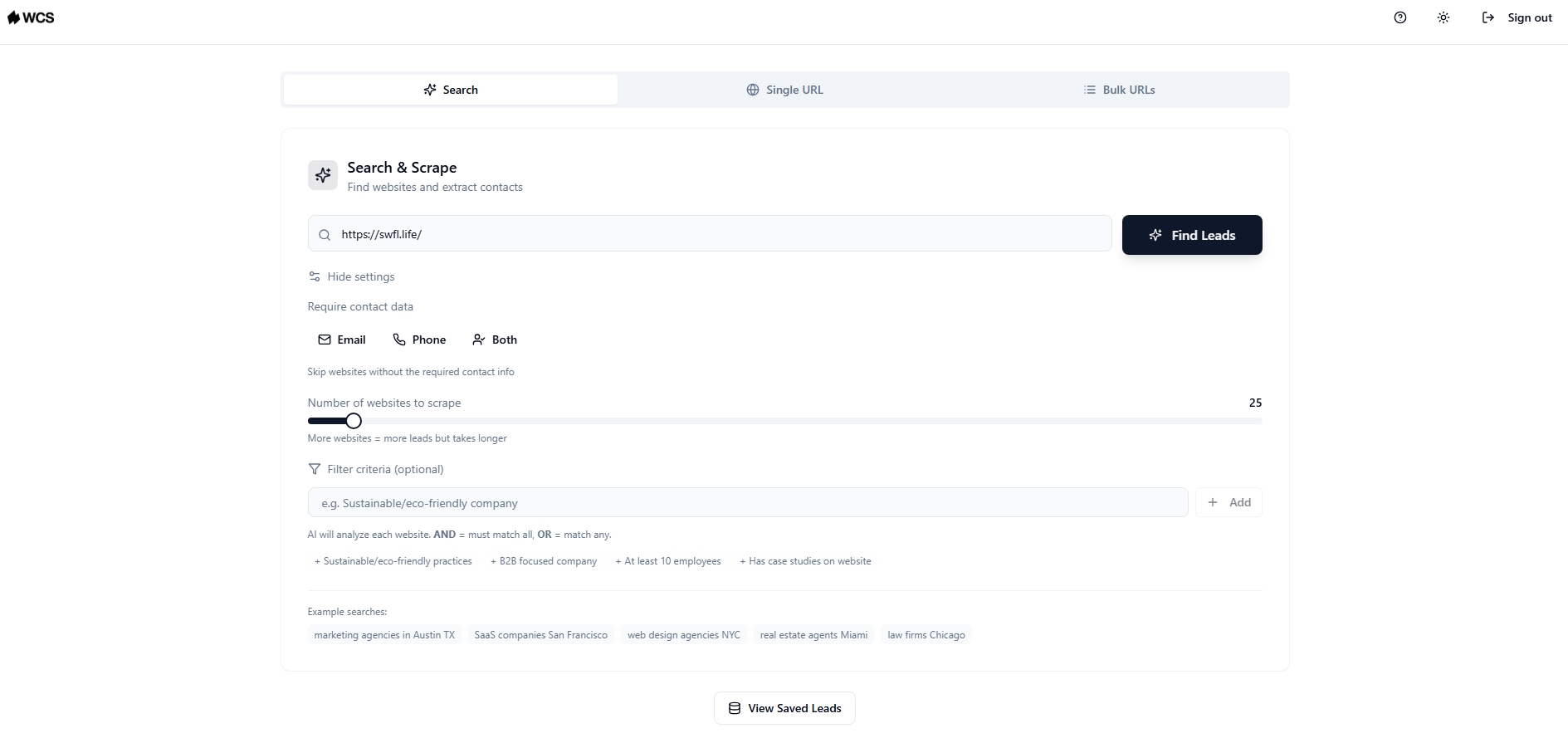
Automation keeps records current without relying on reps to update them manually. Activity logs themselves, contacts get enriched in real time, and pipeline visibility improves across the board. For teams building or refreshing their prospecting lists from scratch, Market Miner pulls verified contact data filtered by industry and location, so the pipeline starts clean rather than needing a cleanup later.
6. Re-Engaging Dormant Leads Without Manual Effort
Most businesses have more pipeline than they realize. It is sitting in a CRM full of contacts who were reached out to once, never properly followed up with, and then forgotten. Those leads are not dead because they were never worked on.
Automated re-engagement sequences can work through that backlog systematically, sending personalized outreach based on where each contact left off. It is one of the fastest ways to generate a pipeline from something a business already owns, without spending a dollar on new lead generation.
Common Implementation Challenges
AI sales automation is not plug-and-play, and most vendors will not tell you that upfront. Three challenges come up consistently with small to mid-sized businesses:
- Fit: Most off-the-shelf tools are built for the widest possible audience, which means businesses end up bending their workflows to match the software rather than the other way around. A company running a relationship-driven, low-volume sales process does not need the same tool as a high-volume SDR team, and forcing that fit leads to low adoption, workarounds, and abandonment within six months.
- Data quality: Automation amplifies whatever is already in the pipeline. A business with 2,000 contacts in a CRM where a significant portion of the email addresses are outdated is not ready for automated outreach. The sequences will run, but they will run into bad data, and the results will reflect that.
- Change management: Sales reps who feel like automation is being used to monitor or replace them will push back. Introducing a new system without explaining what it does for the rep, not just for the business, is one of the most common reasons implementations stall after go-live.
When AI Sales Automation Is Not the Right Move
Not every business is ready for it, and there is no point pretending otherwise. Three situations where it will not deliver:
- The sales process is broken. Automation scales what is already there. If the existing process does not convert, sending more outreach through it just accelerates the problem.
- Volume is not the bottleneck. If the real issue is positioning, pricing, or product fit, no sequence tool will move the needle.
- The underlying data is severely neglected. Cleanup needs to happen before automation goes live. A system running on bad inputs produces bad outputs, at scale.
How We Capture Sales Helps Mid-Sized Businesses Implement AI Sales Automation
Most AI tools are built around the software, not the business using it. We Capture Sales takes the opposite approach, designing every solution around how the client's team actually operates before a single thing gets built.
Every engagement starts with a one-on-one discovery conversation to understand the specific bottlenecks, the existing workflow, and what a practical solution looks like for that team. Nothing gets deployed until that picture is clear.
For businesses focused on sales pipeline and outreach, two products address the use cases covered in this article directly:
- Pipeline Revival: Ingests existing CRM or CSV data and runs targeted email and SMS sequences with automated follow-ups that adapt based on prospect responses, built for re-engagement and pipeline reactivation
- Market Miner: Pulls verified contact data from the web, filtered by industry and location, so teams start outreach with a clean, targeted list rather than working through outdated records
Every solution runs on private, AWS-based infrastructure. Each client operates in a fully isolated environment, and client data is never sold, shared, or used to train public AI models.
Support continues well after go-live. We Capture Sales stays involved to refine workflows, train the team, and adjust the system as the business grows.
For mid-sized businesses that cannot afford a failed implementation, ongoing involvement is what separates a system that delivers from one that gets abandoned.
Not sure where automation would have the highest impact for your business?
Reach out for a free consultation and find out exactly where to start.
Frequently Asked Questions
How will AI affect salespeople?
The short answer is that it makes the job less administrative and more focused on actual selling. AI handles the tasks that consume most of a rep's day, things like data entry, contact research, and follow-up scheduling, so they can spend more time in conversations with prospects.
The salespeople who will feel the biggest impact are those who spend most of their day on work that has nothing to do with closing deals. For them, automation is less of a disruption and more of a relief.
How can I use AI as a salesperson?
A practical starting point is to identify where time is being lost. For most reps, it comes down to three areas:
- Automating prospect research and contact enrichment so list-building does not eat into selling time
- Setting up behavior-triggered follow-up sequences so no lead goes cold between touchpoints
- Using re-engagement tools to work through cold contacts already sitting in the CRM before chasing net-new leads
Starting with one of those, proving it works, and expanding from there is a more sustainable approach than trying to automate everything at once.
Does AI sales automation work for small to mid-sized businesses?
It tends to work particularly well for this segment. Small to mid-sized businesses have enough pipeline volume for automation to make a measurable difference, but lean enough teams that reclaimed time has an outsized impact. A larger enterprise has layers of process and headcount to absorb inefficiency. A team of 10 to 15 does not, which is precisely why automation delivers faster, more visible results at this scale.
How long does it take to see results from AI sales automation?
It depends on how clearly the bottleneck is defined going in. Businesses that start with a specific problem, say, a backlog of cold leads or inconsistent follow-up, and match automation directly to that problem tend to see measurable pipeline movement within 60 to 90 days. Businesses that deploy automation broadly without a clear objective tend to take longer and typically achieve weaker results.


