




According to Demand Gen, 96% of B2B marketers now use AI in their roles, with 45% citing efficiency as the primary benefit. For most marketing teams, that gain is showing up in one specific place: less time on execution, more time on work that drives pipeline.
This article covers eight benefits of AI marketing automation in 2026, what each one looks like for a B2B team, and how to get the most out of it.
Key Takeaways
- AI marketing automation delivers the fastest returns on high-volume, repeatable tasks your team handles every week
- The biggest gains sit in lead quality, follow-up consistency, content output, and email campaign performance
- Personalization at scale is achievable without growing your team to match the output
- The businesses seeing the clearest results start with one process, get it running well, and build from there
- A custom AI system built around your specific workflows will always outperform a generic platform configured to approximate the same outcome
What Is AI Marketing Automation?
AI marketing automation uses artificial intelligence to handle the repetitive, data-dependent, and coordination-heavy tasks that consume marketing team time. That covers everything from scheduling and distributing content to scoring leads to running follow-up sequences that adjust based on how each contact responds.
The distinction from basic automation matters. Basic automation follows a fixed set of rules. It works until something changes, then it breaks. AI automation reads what is happening and adapts: a contact who opens three emails without clicking gets a different next step than one who clicks on the first send.
For a B2B marketing team, that adaptability is where the time savings and performance gains come from. The system handles the execution layer. Your team handles the strategy, relationships, and decisions that need a person behind them.
8 Benefits of AI Marketing Automation in 2026
The benefits below are where B2B marketing teams are seeing the most measurable returns. They sit closest to the work that directly affects pipeline, content output, and lead quality. Here is a quick reference of all eight benefits, what each one replaces, and where the impact shows up for your team:
1. Your Team Spends Less Time on Repetitive Execution
Most marketing teams spend a significant portion of their week on tasks that do not require judgment: scheduling posts, sending follow-up emails, updating contact lists, and pulling performance reports. AI automation handles all of that in the background.
The hours recovered go back to strategy, creative work, and the conversations that actually move deals forward. For lean teams running multiple channels simultaneously, that recovered capacity compounds quickly, especially when AI marketing automation trends are pushing toward more autonomous execution across every channel.
2. Your Content Reaches the Right People with the Right Message
Sending the same message to your entire list at the same time produces inconsistent results because not every contact is at the same stage. AI tools analyze contact behavior, engagement history, and intent signals to determine who should receive which message and when.
The practical outcome for your team:
- Contacts receive content based on how they interact, rather than on a fixed send schedule
- Contacts who click through to high-intent pages like pricing or case studies get flagged automatically so your sales team can follow up at the right moment
- Disengaged contacts get removed from active sequences before they affect deliverability
3. Your Lead Quality Improves Before Outreach Begins
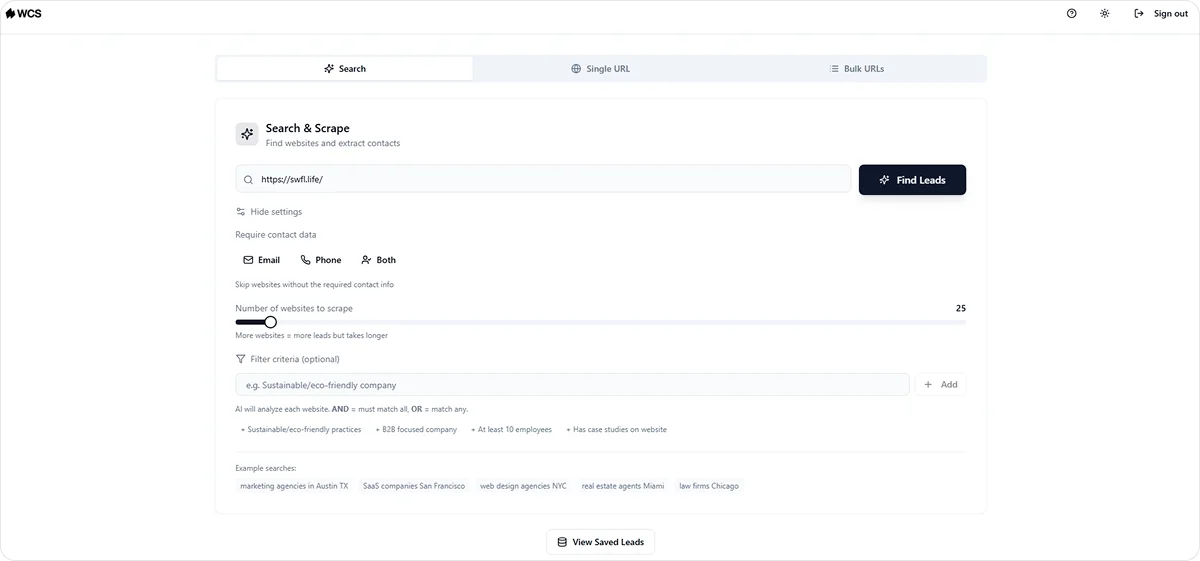
Passing a long list of unqualified contacts to your sales team wastes their time and yours. AI lead scoring analyzes behavioral signals, firmographic data, and engagement patterns to surface the contacts most likely to convert before anyone sends an email or makes a call.
AI lead scoring works best when paired with a process for turning cold contacts into active prospects before your sales team ever touches a name on the list.
4. Your Campaigns Improve Without Manual Optimization
Manual email and content campaign management means someone on your team has to log in, review performance, and adjust messaging or sequencing after the fact. AI campaign optimization handles that continuously, not on a scheduled review cycle.
What that looks like in practice:
- A/B tests run automatically, and it tests different subject lines or email variants without manual input
- Underperforming sequences get flagged before the end of the week, not after the monthly report
- Content variations get served to the segments showing the highest engagement with that message type
5. Your Follow-Up Never Gets Missed
A contact who engages with your content but does not convert is not a lost lead. It is a contact that needs the right follow-up at the right time. AI automation keeps every prospect in a sequence until they book a call, respond, or opt out, without your team tracking each one manually.
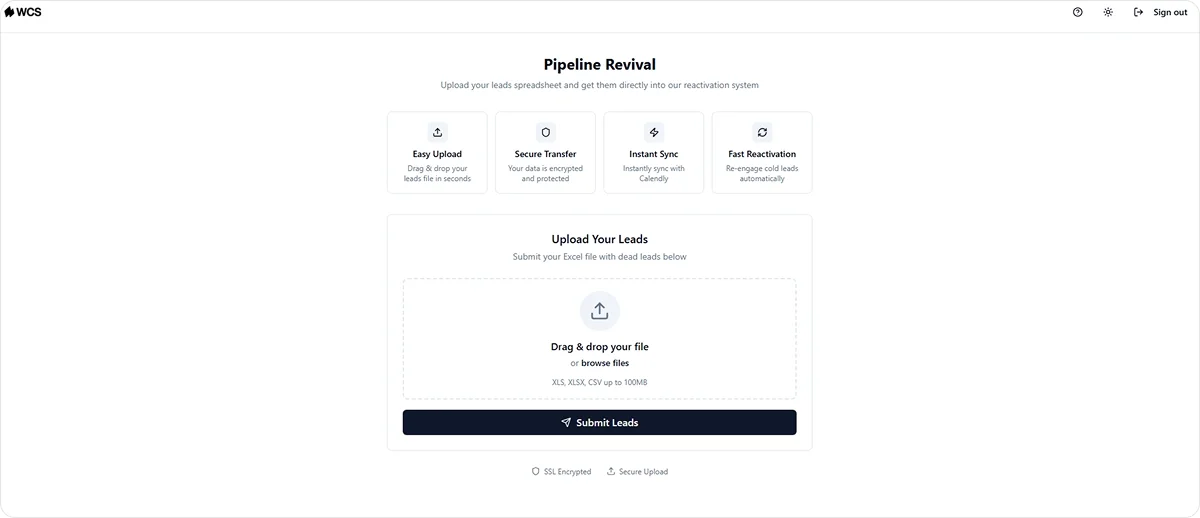
We Capture Sales's Pipeline Revival handles this directly, applying the same principles behind strong follow-up automation to contacts already sitting in your CRM. It ingests your existing CRM or CSV contacts and runs email and SMS sequences that adapt based on open rates and response rates, routing engaged prospects to a Calendly booking link or your website without manual handoff from your team.
6. Your Team Gets Better Insights Without Building Reports Manually
Manual reporting is slow, backward-looking, and takes time your team could spend on decisions rather than data preparation. AI surfaces performance data in real time and flags anomalies as they happen, so your team sees what is going on in the pipeline without waiting on a scheduled report.
The shift is from reactive reporting to proactive decision-making. An email campaign underperforming against a benchmark gets flagged the same day. A segment showing high engagement gets escalated to sales before the momentum fades.
7. Personalization Scales Without Scaling the Team
Personalizing outreach for hundreds of contacts manually is not realistic for a lean team. AI makes it possible by generating content variations, dynamic email copy, and platform-specific messaging based on what each segment responds to.
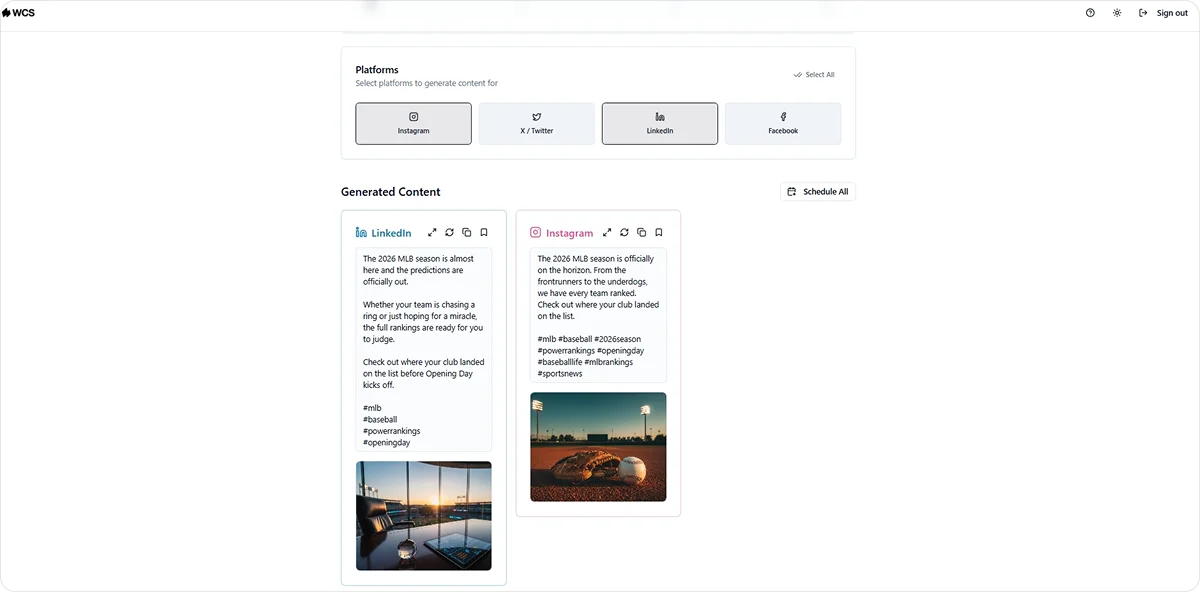
We Capture Sales's Social AI generates branded posts from a URL or text input across Instagram, X, Facebook, and LinkedIn, with platform-specific variations and AI-produced images, organized in a content calendar your team copies and posts manually. It is one of the cleaner applications of AI marketing automation for teams that need consistent branded output across multiple platforms without increasing headcount.
8. Your Marketing and Sales Teams Work From the Same Information
One of the most common friction points in B2B is the handoff between marketing and sales. A lead that engaged with three email campaigns before responding often gets passed with nothing but a name and an email address, and the context gets lost in the transfer.
AI systems that centralize contact activity, campaign performance, and pipeline data remove that friction. Sales receives a lead with full engagement history. Marketing sees which email campaigns are producing pipeline.
We Capture Sales's Knowledge Cloud supports this by storing internal business knowledge and contact information in a private, source-linked AI database your team can query directly. It removes the gap that tends to undermine AI sales automation when marketing and sales are working from different versions of the same contact data.
How to Get the Most Out of AI Marketing Automation
Getting value from AI marketing automation does not require automating your entire marketing operation at once. The teams that see the fastest returns tend to follow the same pattern: pick one high-volume process, get it running well, and build from there.
Three things that make a meaningful difference early on:
- Start with what your team does most: The processes worth automating first are the ones consuming the most time every week. Follow-up sequences, content scheduling, and list management are the most common starting points for B2B teams because the volume is high and the pattern is consistent enough to automate cleanly
- Connect your automation to your CRM from day one: An automation tool that cannot communicate with your contact database creates more coordination work than it removes. Lead data and campaign performance should feed the same system so your sales team always has current context when a prospect responds
- Review what the system produces on a regular basis: AI automation improves with feedback. Checking sequence performance, content engagement, and lead quality quarterly gives you the information you need to tune the system and keep it aligned with how your business is growing
How We Capture Sales Automates Your B2B Marketing From End to End
Most B2B marketing teams running automation end up managing several separate tools, one for content, one for outreach, one for lead data, and spend more time coordinating between them than acting on the output.
We Capture Sales builds a single custom AI system that connects those functions around how your business specifically operates. Every engagement starts with a one-on-one discovery conversation that maps your current marketing workflows, identifies where automation would have the most impact, and determines what the build looks like before anything goes live.
Three products cover the core marketing automation needs B2B teams run into most:
- Social AI: Generates branded posts from a URL or text input across Instagram, X, Facebook, and LinkedIn, with AI-produced images and relevant hashtags, organized in a content calendar your team copies and posts to each platform manually
- Pipeline Revival: Ingests your existing CRM or CSV contacts and runs email and SMS sequences that adapt based on open rates and response rates, routing engaged prospects to a Calendly booking link or your website without manual handoff
- Market Miner: Scrapes competitor activity and contact data filtered by industry and location, delivering clean CSV exports your team can load into an outreach tool directly
Everything runs on private, isolated AWS infrastructure. Your data never touches a public AI model, and the system gets refined after go-live as your marketing workflows evolve.
If you want to understand which of these applies to your current operation, that is what the discovery conversation is for.
Schedule a call to get started.
Frequently Asked Questions
What are the main benefits of AI marketing automation?
The clearest benefits for B2B teams are time saved on repetitive execution, better lead quality before outreach begins, consistent follow-up without manual tracking, and personalized content output at scale. The benefit that shows up fastest depends on which process your team automates first.
How long does it take to see results from AI marketing automation?
Follow-up and pipeline automation tend to show results within the first few weeks because they work on contacts already in your pipeline. Content and lead quality improvements take a little longer as the system builds familiarity with your audience and messaging. Starting with one well-defined process consistently produces faster results than deploying multiple tools at once.
Is AI marketing automation suitable for small and mid-sized businesses?
Yes, and in many cases it is where the impact is most visible. Smaller teams carry a higher cost per hour of manual work, so recovering that time through automation produces a proportionally larger return. The key is starting with a process that runs at high enough volume to justify the setup, which for most B2B teams means follow-up sequences or content scheduling.


