




Autonomous agents and agentic AI jumped from 13% to 17.1% as a top technology priority among IT decision-makers in a single year. For most businesses, the question has moved past whether to adopt AI agents. It is now about how to build one that fits the way your team works.
This article covers what custom AI agent development is, who it makes sense for, and how to choose a development service that delivers a system your team can use from day one.
Key Takeaways
- A custom AI agent is built around your specific workflows, data, and business logic, not a generic use case someone else defined
- Off-the-shelf platforms work well for standard workflows. Custom development is the stronger call when your processes are specific enough that generic tools keep hitting a ceiling
- The use cases producing the clearest returns for B2B teams sit in sales, marketing, operations, and knowledge management
- A serious development partner starts with discovery before anything is built, not a demo
- Data ownership and privacy are not details to sort out later. Get them in writing before the project starts
What Is a Custom AI Agent?
A custom AI agent is a software system built specifically around your workflows, your data, and how your business operates. It can analyze information, make decisions, and take actions across tools and systems without your team stepping in at every stage.
That is what separates it from a basic automation rule or a scripted chatbot. A rule fires when a condition is met. A chatbot responds to what someone types. A custom AI agent reads context, decides what to do next, and executes across multiple tools based on what is actually happening in your pipeline, not what someone hardcoded into a workflow months ago.
Three things make an agent genuinely custom:
- It is configured on your specific data and business processes, not a generic dataset
- It connects to the tools your team already uses: your CRM, email, SMS, internal files, and outreach platforms
- It is built to handle the edge cases your business actually runs into, not just the clean, predictable scenarios
If your team has been running AI sales automation across your pipeline and generic tools cannot handle the specifics of how your workflows run, a custom build is likely the stronger investment
Custom AI Agent vs. Off-the-Shelf Platform: What Is the Difference?
Both options automate work, and the difference is in how well they fit the specific way your business operates.
What Off-the-Shelf Gets Right
Off-the-shelf platforms are built for speed. You can have something running within days, the upfront cost is lower, and you do not need an engineering team to get started. For businesses with straightforward, standard workflows that map cleanly to what the tool was designed to do, this is a reasonable starting point.
Where Custom Development Makes More Sense
A custom AI agent is engineered around your data, your workflows, and the specific decisions your team makes every day. That matters when:
- Your processes are specific enough that a generic tool requires significant workarounds to approximate what you need
- You are working with sensitive business data that cannot sit on shared AI infrastructure
- You need the agent to integrate with multiple internal tools and act across all of them in a coordinated way
- You want the system to improve and adapt as your business evolves, not wait on a vendor's product roadmap
If your workflows are standard and your team needs something running this week, start with a platform. If you keep running into the limits of what a generic tool can do for your specific operation, a custom build is the stronger long-term investment.
What Custom AI Agent Development Services Cover
Before you engage a development partner, it helps to know what a complete service engagement should include. A serious partner does not deliver a tool and leave your team to manage it alone. They cover the full build from discovery to post-launch support.
Here is what that looks like in practice:
- Discovery and workflow mapping: Your processes get mapped before anything is built. This step identifies where automation has the most impact and what the agent needs to do to handle your specific workflows.
- Agent design and architecture: The agent's capabilities, data sources, and tool integrations are defined before development starts, so what gets built matches what your team actually needs.
- Integration with your tech stack: A custom agent connects to your CRM, email, SMS, internal knowledge base, and any other tool your workflows run through.
- Testing and validation: The agent gets tested against the edge cases your business encounters, not just clean, predictable scenarios.
- Post-launch refinement: Your workflows will evolve. A good development partner builds in a process for tuning and improving the agent after it goes live.
We Capture Sales covers this full scope. Every engagement starts with a discovery conversation that maps your workflows, identifies where a custom AI system would have the most impact, and determines what a practical build looks like before any development begins.
Business Use Cases That Justify Custom AI Agent Development
Not every workflow needs a custom AI agent. The ones that do tend to share a common thread: they are high-volume, involve multiple tools or handoffs, and require decisions that change depending on context. Here are the four use cases where B2B teams are seeing the strongest returns.
Sales Outreach and Pipeline Management
Every B2B business has contacts that stopped responding: leads that showed early interest, past customers that churned, and prospects that never converted after an initial conversation. Reaching out to all of them manually is not realistic for a lean team. Turning those contacts into active prospects requires a system that adapts based on how each one responds.
A custom AI agent ingests your existing CRM or CSV data and runs follow-up automation sequences that adapt based on how each contact responds, routing engaged prospects to a booking link or your website without anyone on your team stepping in.
Content and Social Media Operations
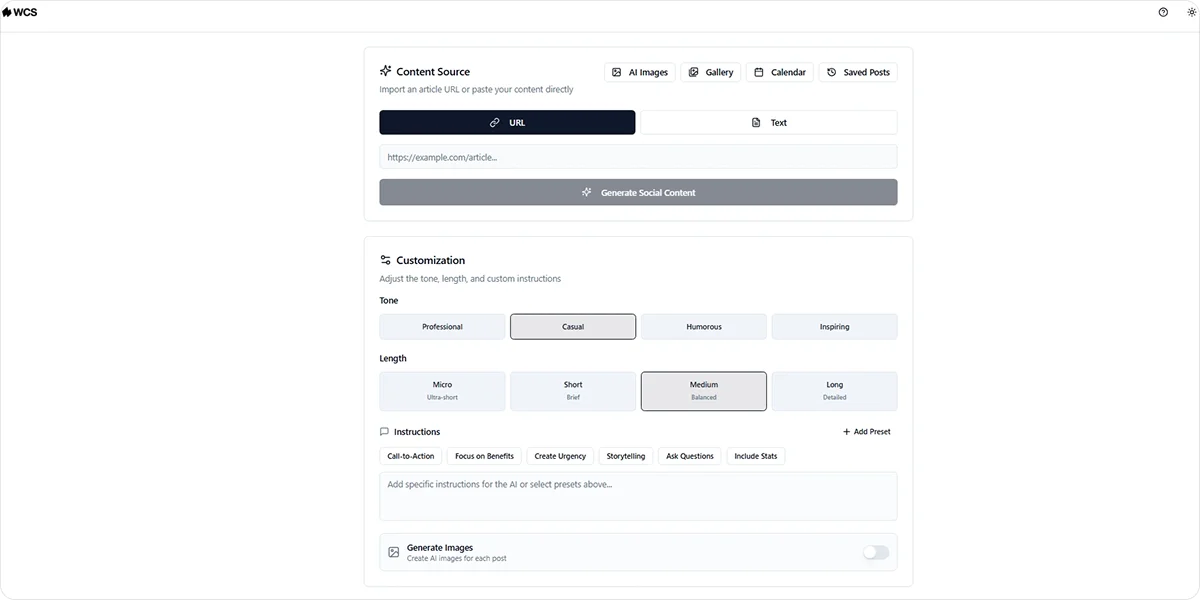
Keeping a consistent social media presence across multiple platforms is the kind of work that consumes time without requiring much judgment. A custom agent generates platform-specific content from a URL or text input, organizes everything into a content calendar, and hands it off for your team to post manually. Brand voice stays consistent without dedicating headcount to it.
Market and Competitor Intelligence
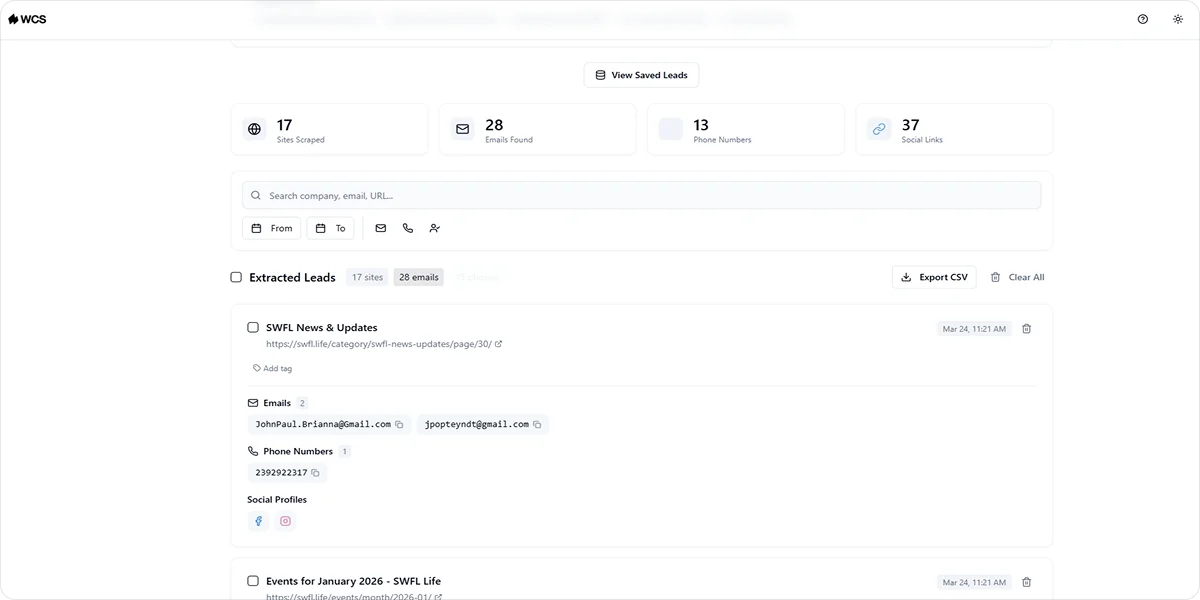
Tracking competitor activity, identifying accounts showing buying signals, and flagging industry developments that create outreach opportunities is a full-time job. A custom agent monitors those sources continuously, filters contact data by industry and location, and delivers clean CSV exports your team can load into an outreach tool directly.
Internal Knowledge Management
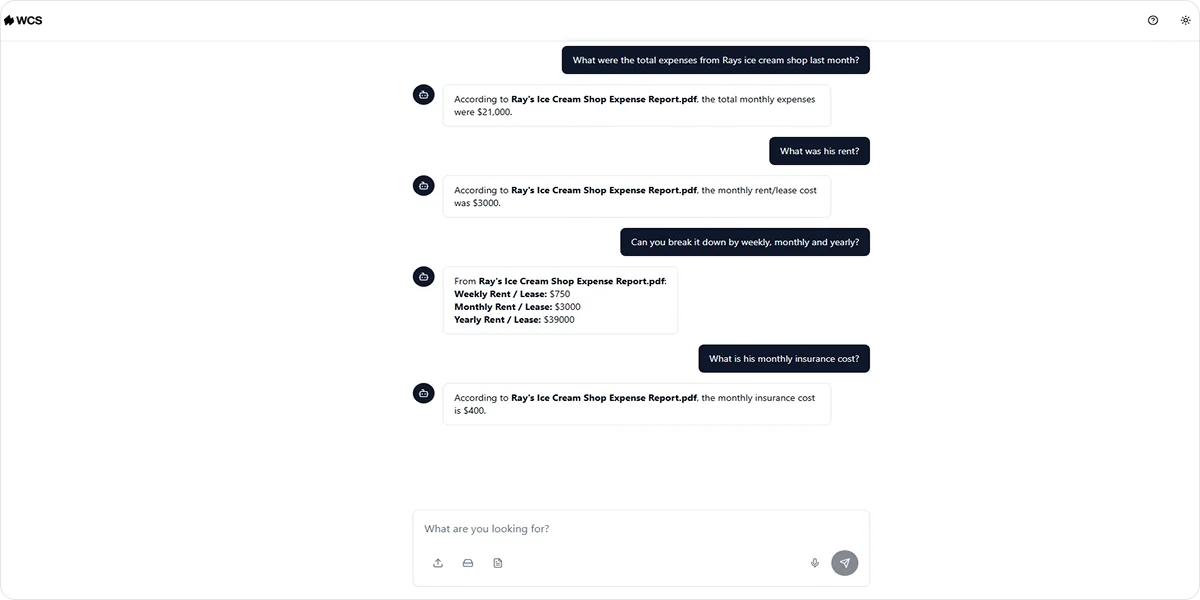
Years of accumulated business knowledge tend to live across old email threads, shared drives, and internal documents. A custom AI agent centralizes that information in a private, queryable database, where every response is source-linked, so your team can verify its source. Sensitive business data stays on private infrastructure and never touches a public AI model.
What to Look for in a Custom AI Agent Development Service
Most businesses evaluating custom AI agent development focus on capabilities and pricing. Those matter, but they are not where the decision should start. Here are the three signals that separate a serious development service from one that will cost you time and budget.
They start with discovery call
A development service that jumps straight to showing you a product before understanding your workflows is optimizing for the sale, not the outcome. The right service maps your processes, identifies where automation has the most impact, and determines what a practical build looks like before any development begins.
They can show production deployments, not just prototypes
Ask for case studies with specific outcomes. A development service worth engaging can point to systems that have been running in production for real businesses, with measurable results. Impressive demos are easy to build. Production systems that perform consistently in real business environments are not.
They are clear about data ownership and privacy
Some development services retain IP rights or use your data to improve models for other clients. Before you sign anything, confirm in writing that you own the trained models, the data pipelines, and the code. If a service is vague about this, that is your answer.
How We Capture Sales Builds Custom AI Systems for B2B Teams
Most businesses evaluating custom AI agent development end up managing several disconnected tools that do not communicate with each other. We Capture Sales takes a different approach, building a single custom AI system that connects the functions your business needs.
Every engagement begins with a one-on-one discovery conversation, because how to increase sales with AI automation looks different for every business, depending on which workflows are consuming the most time.
Four purpose-built products cover the core use cases B2B teams need most:
- Pipeline Revival: Ingests your existing CRM or CSV contacts and runs email and SMS sequences that adapt based on open rates and response rates, routing engaged prospects to a Calendly booking link or your website without manual handoff. This is where most teams build initial pipeline momentum.
- Social AI: Generates branded posts from a URL or text input across Instagram, X, Facebook, and LinkedIn, with AI-produced images and hashtags, organized in a content calendar your team copies and posts to each platform manually.
- Market Miner: Scrapes competitor activity and contact data filtered by industry and location, delivering clean CSV exports your team can load into a CRM or outreach tool without additional processing.
- Knowledge Cloud: Stores your internal business knowledge in a private AI database connected to your files, source-linked and fully private, so every AI system running your workflows draws from accurate, current information.
Every client operates in a fully isolated AWS tenant environment. Your data is never shared, never used to train public AI models, and never accessible outside your environment. Pricing is per organization regardless of headcount, and every new client has a one-on-one meeting before any trial begins.
Not sure where your business fits within this? That is what the discovery conversation is for.
Reach out to the We Capture Sales team to schedule a call today.
Frequently Asked Questions
What is custom AI agent development?
Custom AI agent development is the process of building an AI system around your specific business workflows, data, and tools. Unlike off-the-shelf platforms built for general use cases, a custom agent is designed to handle the specific decisions, integrations, and edge cases your operation requires.
How long does it take to build a custom AI agent?
It depends on the complexity of your workflows and the number of integrations involved. A focused build around one or two core processes moves faster than a multi-function system connecting several tools. The discovery conversation at the start of any engagement is what sets a realistic timeline before development begins.
How is a custom AI agent different from a chatbot?
A chatbot responds to what a user types, typically following a script or predefined responses. A custom AI agent reads context, makes decisions, and takes actions across tools and systems based on what is happening in your workflows, without waiting to be prompted at every step.
Do you need a technical team to work with a custom AI agent development service?
No. The right development service handles the technical build around your existing workflows and data. What matters more than internal technical capability is a clear picture of which processes you want to automate and what a successful outcome looks like for your business.


