




Most growing businesses hit the same wall. Revenue increases, the pipeline expands, and suddenly the team is spending more time managing volume than doing the work that drives growth. 88% of organizations use AI automation in at least one business function, but only 33% have deployed it across their organization. The gap between those two numbers is where most businesses are stuck.
This article covers 7 ways businesses use AI automation to grow efficiently, which functions benefit most, and how to identify the right starting point.
Key Takeaways
- AI automation helps your business grow by handling increasing volume without requiring your team to expand at the same rate.
- The right process to automate first is the one already creating a backlog or producing inconsistent output under your current volume.
- High-volume, repeatable functions like sales outreach, content production, and market intelligence tend to show the fastest returns because the pattern is consistent enough for a system to handle reliably.
- AI automation covers execution and coordination. Decisions that require judgment, client relationships, and creative direction stay with your team.
- Deploying one well-scoped automation before adding others produces faster, cleaner results than trying to automate multiple functions at once.
The Difference Between Using AI Automation and Growing With It
Using AI automation means a tool handles a task. Growing with AI automation means the system absorbs increasing volume without your team having to expand at the same rate.
Most businesses that adopt AI tools do not automatically grow with them. They add a tool, it handles a specific task, and the rest of the operation stays manual. When volume increases, the bottleneck moves but does not disappear.
A business genuinely growing with AI automation shows three signs:
- Output increases without adding headcount to match it
- New volume gets absorbed without new coordination overhead
- The system produces better outputs over time as it processes more data
Which Process to Automate First
The process worth automating first is the one already breaking under your current volume. Not the one that sounds most impressive to automate, and not the one a vendor demo made look easiest.
If your team can name a process that creates a backlog, produces inconsistent output, or requires more people every time volume increases, that is the right starting point.
Three signals worth looking for before committing to any automation build:
- High frequency: the process happens multiple times a day or week
- Consistent pattern: the steps are predictable enough that a system can handle them
- Visible output gap: the current manual process is not keeping up with demand
If you’re thinking of where to begin, understanding which AI business process automation functions produce the most measurable returns is a useful first step before committing budget to any specific tool.
7 Ways Businesses Use AI Automation to Grow
The seven functions below are where growing B2B teams are seeing the most measurable returns. Each one addresses a specific operational constraint that gets more expensive to manage manually as volume increases.
1. Sales Outreach Grows Without Adding Headcount
As your pipeline grows, the volume of contacts that need follow-up grows with it. Reaching out to all of them manually means hiring more people. Most businesses either hire to keep up or let a portion of the pipeline go untouched.
AI automation runs outreach sequences that adapt based on how each contact responds:
- A contact who opens twice gets a different follow-up from one who has not engaged
- Engaged contacts get routed to a booking link or your website without anyone on your team stepping in
- Dormant contacts stay in a sequence until they respond or opt out
Outreach volume moves with your pipeline rather than your team size. For businesses carrying a backlog of dormant contacts, this is where automated follow-up produces the most immediate return.
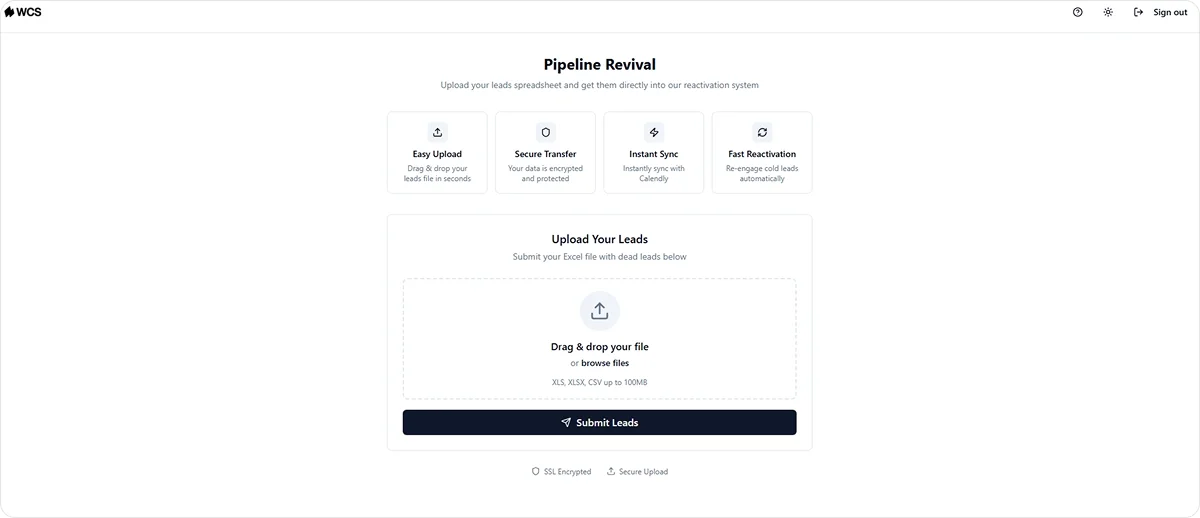
We Capture Sales's Pipeline Revival handles this directly. It ingests your existing CRM or CSV contacts and runs email and SMS sequences that adapt based on open rates and response rates, routing engaged prospects to a Calendly booking link or your website without manual handoff.
2. Content Production Grows Without a Larger Team
As your business adds products, markets, and channels, content demand increases. Producing that content manually means more writers, more briefing sessions, and more review cycles. For lean marketing teams, that coordination overhead limits output before budget or ideas do.
AI automation handles the production layer:
- Generates platform-specific content from a URL or text input
- Organizes everything into a content calendar your team works from
- Keeps brand voice consistent across channels without manual oversight
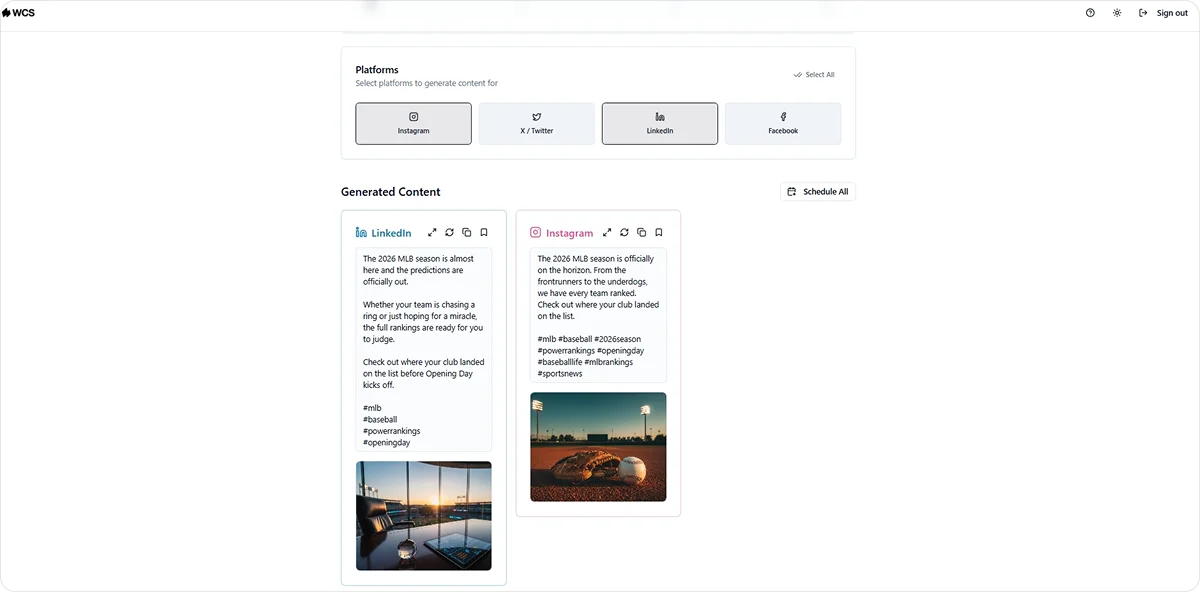
We Capture Sales's Social AI handles this across Instagram, X, Facebook, and LinkedIn. It generates branded posts with AI-produced images and relevant hashtags, organized in a content calendar your team copies and posts manually. For lean teams that need consistent output, this is one of the more direct AI marketing automation applications available.
3. Market Intelligence Grows Without a Dedicated Analyst
Tracking competitor activity, identifying accounts showing buying signals, and monitoring industry developments that create outreach opportunities takes more time than most growing teams have. Few businesses have someone dedicated to it.
AI automation monitors those sources continuously. When a target account posts jobs signaling growth, or a competitor adjusts pricing, your team gets that information without anyone spending hours on manual research.
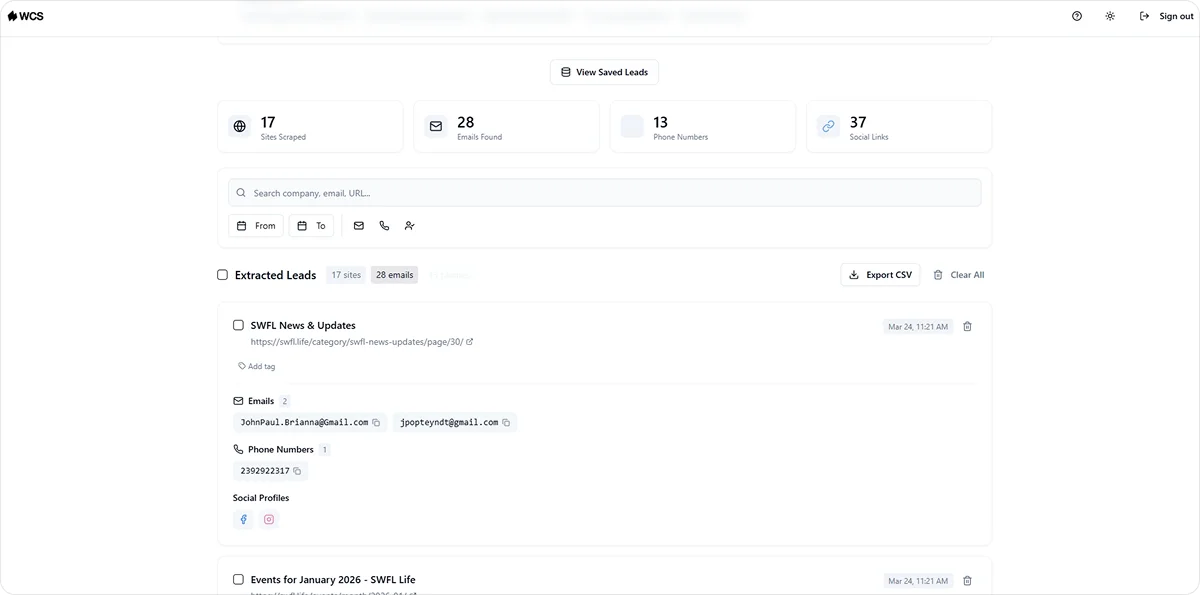
We Capture Sales's Market Miner handles this through web scraping, pulling competitor activity and contact data filtered by industry and location, and delivering clean CSV exports your team can act on directly.
4. Internal Knowledge Stays Accessible as Your Team Grows
In a small team, institutional knowledge is relatively easy to access. As your team grows, that knowledge fragments across email threads, shared drives, and the experience of people who have been there the longest.
A new hire joining a 200-person team faces a steeper knowledge gap than one joining a 20-person team. Without a centralized system, they either interrupt senior colleagues or spend time hunting for information across multiple tools.
AI knowledge management centralizes that information in a private, queryable database where every response is source-linked so your team can verify where the information came from.
We Capture Sales's Knowledge Cloud stores your internal business knowledge in a private AI database connected to your files, fully private and source-linked. For teams running AI business process automation across multiple functions, centralizing knowledge keeps every system drawing from accurate, current information.
5. Customer Support Handles More Volume Without Proportional Staffing
When support requests come in at volume, someone on your team has to read each one, figure out what it is about, decide how urgent it is, and send it in the right direction. At low volume that is manageable. As your request volume grows, it becomes a full-time job before your team can get to the actual solving.
AI support triage reads each incoming request, detects intent and urgency, and routes it to the right team or triggers an automated response for common queries:
- Billing questions go one direction
- Technical issues go another
- Urgent or frustrated messages get flagged for immediate human attention
Your team focuses on the cases that genuinely need a person. Routine requests get handled automatically, so support capacity grows with request volume rather than headcount.
6. Financial Oversight Stays Current Without Manual Reporting
As your transaction volume grows, manual financial reporting becomes a bottleneck. By the time a monthly report reaches leadership, the decisions it should have informed have already been made on incomplete information.
AI anomaly detection changes that timeline:
- A transaction outside normal patterns gets flagged the same day
- An expense that does not match an approved purchase order gets held for review before it becomes a problem
- Spending irregularities surface in real time rather than at the end of the month
Your team sees what is happening in the business as it happens, not weeks later.
7. HR Onboarding Handles More Hires Without More Administrative Work
Onboarding a new hire involves more coordination than it looks like from the outside. Collecting documents, validating completeness, routing tasks to IT, finance, and operations, sending reminders when something is missing. Done manually across multiple hires at once, it consumes a significant amount of HR time.
AI onboarding automation handles the coordination layer:
- Validates that submitted documents are complete and correctly formatted
- Routes tasks to the relevant departments based on the hire's role and start date
- Sends reminders to the new hire or internal teams when action is needed
- Flags exceptions for HR to review rather than requiring HR to monitor every step
Your people handle the decisions and the relationships. The coordination runs automatically, so your onboarding process grows with your hiring volume rather than your HR headcount.
What AI Automation Cannot Do for You
AI automation handles volume, consistency, and coordination. There are three things it does not replace as your business grows, and treating it as a substitute for any of them creates problems down the line.
- Strategic decisions: AI surfaces information faster and flags patterns your team might miss. But deciding which markets to enter, which clients to prioritize, and how to position your business requires judgment, context, and accountability that a system cannot provide
- Client and partner relationships: Automated outreach gets contacts into a conversation. The conversation itself, the trust-building, the negotiation, and the long-term relationship management still needs a person behind it
- Creative direction: AI can generate content variations and maintain brand voice at volume. It cannot define what your brand stands for, decide what story you are telling, or make the creative calls that differentiate your business from competitors using the same tools
The businesses that get the most out of AI automation are clear about this distinction from the start. They use automation to handle the execution layer and keep their people focused on the work that requires judgment.
How We Capture Sales Helps B2B Teams Grow With AI Automation
Growing a business manually is expensive. Every new function you add requires more people, more coordination, and more oversight. We Capture Sales builds custom AI systems that absorb that growing volume without requiring your team to expand at the same rate.
Every engagement starts with a one-on-one discovery conversation. That conversation maps your current workflows, identifies which functions are breaking under current volume, and determines what a custom build looks like before any development begins.
Here is what every client gets:
- Pipeline Revival: Runs email and SMS sequences that adapt based on open rates and response rates, routing engaged prospects to a Calendly booking link or your website without manual handoff from your team
- Social AI: Generates branded posts from a URL or text input across Instagram, X, Facebook, and LinkedIn, with AI-produced images and hashtags, organized in a content calendar your team copies and posts manually
- Market Miner: Pulls competitor activity and contact data filtered by industry and location, delivering clean CSV exports your team can load into a CRM or outreach tool directly
- Knowledge Cloud: Stores your internal business knowledge in a private AI database, source-linked and fully private, so every system running your workflows draws from accurate, current information
Every client system runs on a fully isolated AWS tenant environment. Your data never touches a public AI model, is never shared, and pricing is per organization regardless of headcount.
If your business is at the point where manual processes are limiting growth rather than supporting it, that is exactly what the discovery conversation is designed to address.
Contact the We Capture Sales team to get started.
Frequently Asked Questions
How can AI automation help a business grow?
AI automation handles the high-volume, repeatable work that consumes team time without requiring judgment at every step. Follow-up sequences, content production, support triage, and report generation all run automatically, so your team focuses on the decisions and relationships that move the business forward.
Which business functions benefit most from AI automation when growing?
The functions that benefit most are the ones already struggling under current volume. Sales outreach, content production, customer support, and internal knowledge management are the most common starting points for B2B teams because the volume is high.
How do you know when your business is ready to use AI automation to grow?
The clearest signal is a process your team repeats multiple times a week that produces inconsistent output or creates a backlog as volume increases. If your team can describe the steps from memory and those steps do not change significantly depending on who is involved, the process is ready to automate.


