




Generating pipeline manually is one of the most time-consuming parts of running a B2B sales team. According to Forrester, sales reps spend just 23% of their working week on direct selling, with the rest consumed by admin, internal meetings, and research before a single conversation starts.
AI lead generation automates that execution layer so your team focuses on the conversations that actually require a person. This article shares 10 ways to use AI for lead generation, what each one does, and how to apply it to your pipeline.
Key Takeaways
- AI lead generation automates the research, scoring, outreach, and qualification work your team currently handles manually, so your people focus on the conversations that actually require judgment
- The biggest gains show up in prospect list building, lead scoring, outreach sequencing, and qualification, the functions that consume the most time without requiring creative or strategic thinking
- AI outreach adapts based on what each contact does rather than following a fixed schedule, which produces better response rates than standard drip campaigns
- Clean CRM data is a prerequisite for effective AI lead generation. A system working from outdated or duplicate records produces inaccurate scoring and wasted outreach
- AI handles the execution layer. Defining your ICP, building relationships, and making strategic decisions about which markets to pursue still require a person.
What Is AI Lead Generation?
AI lead generation is the use of machine learning and automation to handle the research, scoring, outreach, and qualification work involved in finding and converting prospects. Instead of your team manually building lists, reviewing leads, and chasing follow-ups, the system handles all of that based on data and behavioral signals.
The core difference from traditional lead generation is adaptability. A traditional approach follows a fixed process: build a list, send a sequence, wait for replies. An AI-driven approach reads what each contact does and adjusts the next step accordingly. A contact who visits your pricing page gets a different follow-up from one who has not engaged at all.
Here is how the two approaches compare:
10 Ways to Use AI for Lead Generation Automation
Each way below covers a distinct part of the lead generation process. Together, they move a contact from first identification to a qualified conversation without your team manually managing each step.
1. AI-Powered Prospect List Building
Purchased contact lists have one consistent problem: by the time you use them, a portion of the data is already out of date. People change jobs, companies shift direction, and a list compiled three months ago may already be full of contacts who have moved on.
AI-powered list building pulls live data based on buying signals rather than a static database. When a target account posts jobs signaling growth or shows other indicators of an active buying cycle, the system flags relevant contacts at that moment rather than weeks later.
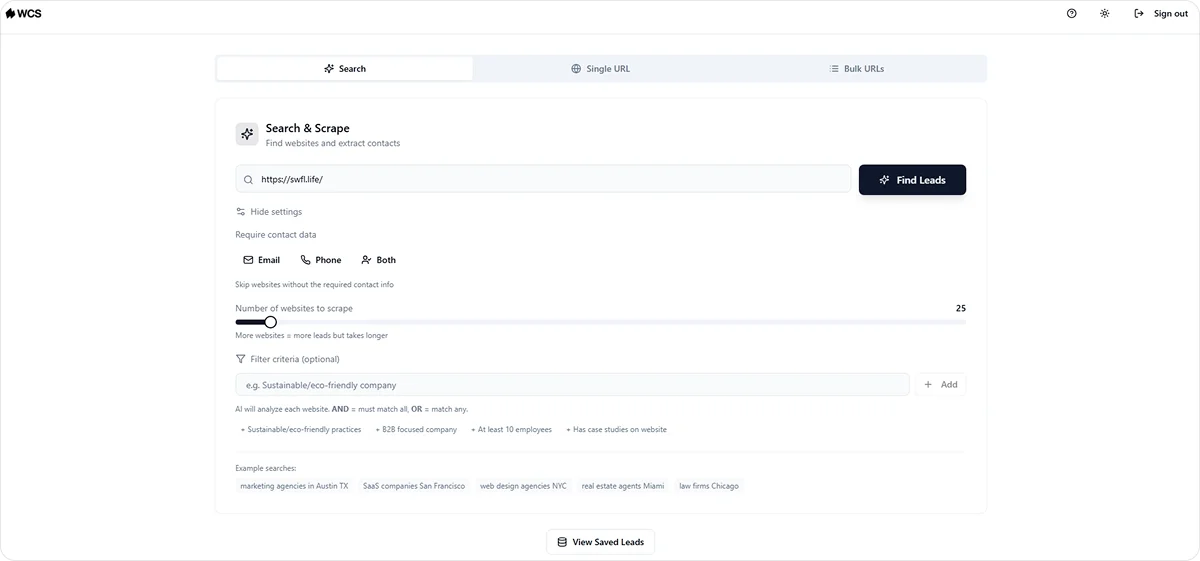
Building lists from live signals means your team reaches the right accounts when they are most likely to be receptive. Market Miner at We Capture Sales does exactly this, scraping competitor activity and contact data filtered by industry and location, and delivering clean CSV exports your team can load directly into an outreach tool.
2. Predictive Lead Scoring
Not every contact in your pipeline deserves the same attention. A contact who visited your pricing page three times this week is further along in their decision than one who downloaded content six months ago and never came back.
AI lead scoring analyzes behavioral signals, firmographic data, and engagement history to rank each contact by conversion likelihood. High-intent contacts get prioritized immediately. Contacts that do not yet fit your ICP stay in a nurture sequence until their behavior changes.
A strong approach to turning cold contacts into active prospects before scoring begins consistently improves the quality of what the system works with, since cleaner input produces more accurate rankings.
3. Adaptive Outreach Sequencing
A fixed outreach sequence sends the same message to every contact on the same schedule, regardless of what they do. That works until you are dealing with more contacts than your team can personally track, which is when follow-up becomes inconsistent, and deals start slipping.
AI-driven sequences read what each contact does and adjust the next step accordingly:
- A contact who opens but does not reply gets a follow-up that approaches the conversation from a different angle
- A contact who clicks through to a specific page gets a follow-up relevant to what they looked at
- A contact who replies gets routed out of the sequence and into a direct conversation
Pipeline Revival at We Capture Sales is built around this mechanism, ingesting your existing CRM or CSV contacts and running email and SMS sequences that adapt based on open rates and response rates. For teams looking at automated follow-up as a lead generation tool, this is where the most immediate pipeline gains tend to show up.

4. AI Chatbots for Inbound Lead Qualification
When someone visits your website, they are showing intent. The problem is that most B2B websites let that intent walk away with nothing more than a contact form the visitor may or may not fill out.
AI chatbots engage website visitors in real time, ask qualifying questions, and route high-intent contacts to a booking link or directly to a rep without anyone on your team being available at that moment. Unlike a static form, the chatbot adapts based on how the visitor responds.
The most effective chatbot deployments for B2B teams focus on a narrow set of qualifying questions tied directly to ICP criteria:
- Company size and industry
- The specific challenge the visitor is trying to solve
- Timeline and decision-making authority
That information is enough to separate a high-intent visitor from one who is browsing and to route each one appropriately without manual review.
5. Automated Lead Nurturing
Most B2B contacts are not ready to buy when they first engage. They need time, information, and repeated exposure to your brand before they are ready for a sales conversation.
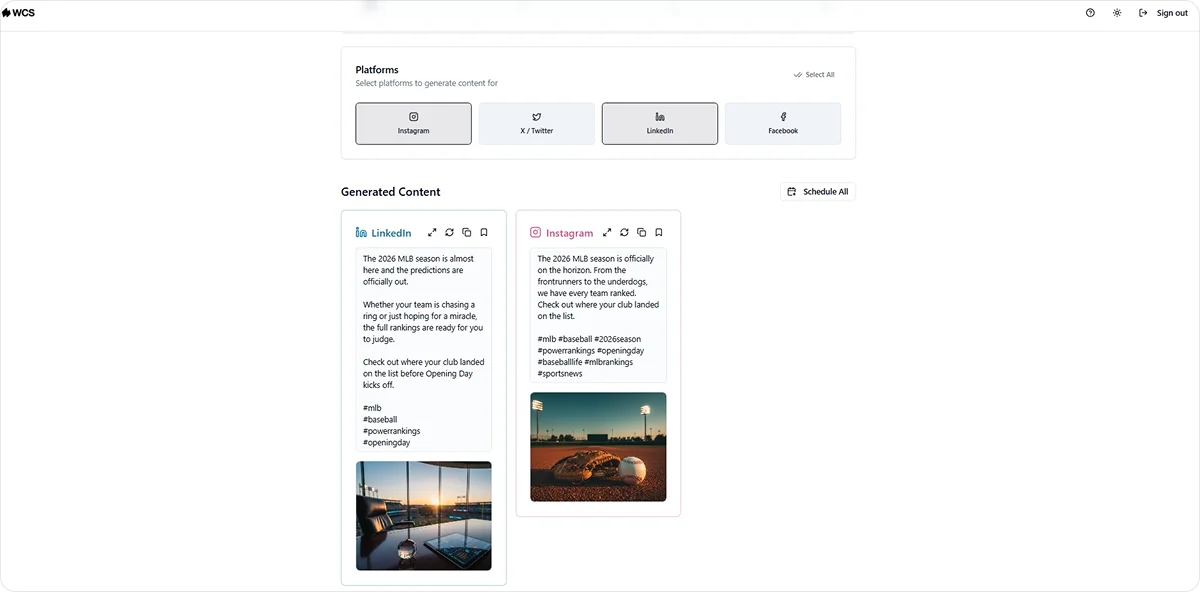
AI nurturing keeps contacts engaged between direct sales interactions without your team producing content for each channel every week. The system generates platform-specific posts from a URL or text input, organizes them into a calendar, and keeps your brand present consistently.
Social AI at We Capture Sales handles this across Instagram, X, LinkedIn, and Facebook, generating branded posts with AI-produced images and relevant hashtags, organized in a content calendar your team copies and posts manually.
6. Personalization at Scale
Writing a genuinely personalized message for every contact on a list of 500 is not realistic. Generic outreach is what most teams default to, and it shows in response rates.
AI generates individualized email copy, subject lines, and content variations based on each contact's profile, recent activity, and buying stage. A contact at a Series B fintech company gets different messaging from one at an enterprise logistics firm, even if both are in the same outreach sequence.
That relevance is what drives response rates higher without increasing production resources. AI email marketing automation that personalizes at the message level consistently outperforms batch-and-blast campaigns because the contact feels the message was written for them.
7. Buying Signal Monitoring
Reaching a prospect before they have settled on a vendor gives your team a head start that better messaging alone cannot create. The challenge is that buying signals move fast and are spread across too many sources for any team to monitor manually.
AI market intelligence monitors those sources continuously. When a target account posts new senior roles, when a competitor loses a major client, or when an industry development creates a timely outreach window, the system flags it so your team can act while the window is still open.
For teams building a pipeline around timing rather than volume, web scraping for B2B lead generation produces more relevant prospect data than purchasing a static list compiled months earlier.
8. Contact Data Enrichment and CRM Maintenance
Every lead generation process downstream depends on the quality of your CRM data. Inaccurate contact records produce wrong scoring, wasted outreach, and reporting your team cannot trust.
AI data enrichment handles this automatically:
- Verifies email addresses and removes invalid formats before they enter a sequence
- Fills missing firmographic fields like company size, industry, and job title
- Flags duplicate records so contacts do not receive the same outreach twice
- Updates contact records when people change roles or companies
For teams running AI business process automation across multiple functions, clean CRM data is what keeps every system downstream producing reliable outputs.
9. Dormant Lead Reactivation
Every B2B team has contacts in their CRM that showed genuine interest and then went quiet. They are not lost leads. They are contacts that need a different message at a different time.
AI reactivation sequences identify those dormant contacts automatically based on inactivity thresholds, segment them by how long they have been quiet and where they dropped off in the funnel, and run targeted sequences designed specifically for re-engagement.
A reactivation message works because it leads with something new rather than repeating the original pitch, whether that is a product update, a relevant case study, or a timely industry development. Lead reactivation done well consistently recovers the pipeline from contacts your team had written off.
10. Pre-Conversation Intelligence
Before any sales conversation, your rep needs context: what the prospect does, what they have engaged with, where they are in the buying journey, and what questions are likely to come up. Gathering that manually before every call takes time your team could spend on the conversation itself.
AI knowledge management gives your team instant access to accurate, source-linked internal information without hunting across shared drives or asking a senior colleague. A rep can query the system for relevant case studies, product details, and competitive positioning in seconds.
Knowledge Cloud at We Capture Sales stores internal business knowledge in a private AI database connected to your files, source-linked and fully private. Every rep walks into a prospect conversation with the context they need, which is one of the more overlooked ways AI sales automation improves lead conversion at the bottom of the funnel.
What AI Cannot Replace in Lead Generation
AI handles the execution layer of lead generation well. It finds contacts, scores them, runs outreach, and routes qualified prospects forward without your team managing each step manually. Three things it does not replace are worth being clear about before you build anything.
- ICP definition and targeting strategy: AI executes against the ideal customer profile your team defines. Deciding which markets to enter, which segments to prioritize, and how to position against specific competitors requires human judgment that no system can replicate
- Relationship-building and discovery: AI gets a contact to a conversation. The trust-building, needs discovery, and objection handling that turn a qualified contact into a paying customer still requires a person behind it
- Creative direction and brand voice: AI generates content variations and personalized copy at scale. What your brand stands for, the story you are telling, and the positioning decisions that differentiate you require human creative direction
The teams that get the most out of AI lead generation treat it as a system for handling execution and keep their people focused on the work that requires judgment.
How We Capture Sales Supports AI Lead Generation for B2B Teams
Stitching together several disconnected tools for lead generation, one for list building, another for outreach, and a third for content, creates a new problem: your team spends more time managing the connections between them than acting on what they produce.
We Capture Sales takes a different approach. Rather than handing over a platform, your team has to figure out that every engagement starts with a one-on-one conversation that identifies where your current lead generation process is losing time and contacts, and determines what a connected system looks like for your specific pipeline before anything gets built.
The four products address the ten ways covered in this article directly:
- Market Miner: Pulls live competitor activity and contact data filtered by industry and location, so your prospect list reflects what is happening in your market today rather than what a database compiled months ago
- Pipeline Revival: Runs email and SMS sequences that adapt based on how each contact responds, routing engaged prospects to a Calendly booking link or your website the moment they show intent
- Social AI: Generates branded posts from a URL or text input across Instagram, X, Facebook, and LinkedIn, organized in a content calendar your team copies and posts manually, keeping your brand visible between direct sales interactions
- Knowledge Cloud: Gives your team instant access to internal product information, case studies, and process documentation before any prospect conversation, so every rep walks in prepared
Pricing is per organization regardless of team size, and every engagement starts with a discovery conversation rather than a self-serve signup.
Contact the We Capture Sales team to schedule a meeting today.
Frequently Asked Questions
Is AI lead generation better than manual prospecting?
For high-volume, repeatable tasks like list building, scoring, and follow-up sequencing, AI produces faster and more consistent results than manual prospecting. Where manual prospecting still has an edge is in complex, relationship-driven outreach where context and human judgment matter more than speed.
How much does AI lead generation cost?
Cost varies significantly depending on whether you buy an off-the-shelf tool or build a custom system. Off-the-shelf platforms typically charge per seat or per contact. Custom systems require a higher upfront investment but cost less per user over time and fit your specific workflows more accurately.
Can small B2B teams use AI for lead generation?
Yes, and the return is often proportionally larger for smaller teams because the hours saved represent a bigger share of total capacity. The key is starting with one high-volume process, getting it running cleanly, and measuring the result before adding more automation on top of it.


