




Every extra day in a sales cycle usually comes from small delays that compound over time. A slow response to a new lead, a missed follow-up, or hours spent qualifying prospects can quietly add weeks to a deal. That is why teams are turning to AI automation to shorten the sales process.
Revenue teams using AI sales automation report 30% shorter sales cycles and 50% higher win rates. The difference between those results and what most teams actually see comes down to which delays they addressed and where in the cycle they started.
This article covers six ways AI automation reduces sales cycle length, where each delay comes from, and how removing it moves deals forward faster.
Key Takeaways
- Most sales cycle delays build up long before negotiation, in how fast your team responds to leads, how consistently follow-up runs, and how much time goes into manual qualification.
- Removing friction at multiple stages of the cycle produces a more significant overall reduction than fixing one stage deeply while leaving the others manual.
- AI automation works best on high-volume, repeatable sales tasks. Relationship-building, negotiation, and deal judgment still need a person behind them.
- Inconsistent follow-up between pipeline stages is one of the most common reasons B2B teams lose deals that were close to converting.
- The biggest gains come from building your sales process around AI automation, not from adding tools on top of a workflow that stays largely unchanged.
6 Ways AI Automation Reduces Sales Cycle Length
Each way below addresses a distinct stage of the sales cycle where delay builds up. Together, they cover the full pipeline from first contact to close.
1. Faster Lead Response Stops Deals Going Cold After First Contact
Most B2B teams think of lead response time as a courtesy issue. It is a conversion issue. The longer the gap between a prospect engaging and your team following up, the lower the probability that prospect moves forward.
AI automation triggers follow-up sequences immediately after a contact engages, without anyone on your team having to notice and act. A prospect who visits a pricing page, opens an email, or attends a webinar gets a relevant follow-up within minutes rather than hours.
For teams carrying a significant volume of contacts, this is where follow-up automation produces the most immediate reduction in cycle time. The sequence runs based on what each contact does, not when someone on your team remembers to check in.
We Capture Sales's Pipeline Revival handles this directly, ingesting your existing CRM or CSV contacts and running email and SMS sequences that adapt based on open rates and response rates, routing engaged prospects to a Calendly booking link or your website without manual handoff.

2. Better Lead Qualification Removes Slow Deals From the Pipeline Early
A pipeline full of poorly qualified contacts makes the entire cycle feel longer because your team is investing time in deals that are unlikely to close.
AI lead scoring analyzes behavioral signals, firmographic data, and engagement patterns to surface the contacts most likely to convert. Contacts that do not fit your ICP get deprioritized early, so your team focuses on the deals most likely to move rather than working an undifferentiated list.
The qualification improvement compounds when paired with a strong process for turning cold contacts into active prospects before scoring even begins, since the cleaner the input, the more accurate the scoring output.
3. Consistent Follow-Up Keeps Deals Moving Between Stages
AI automation runs multi-touch sequences that adapt based on how each contact responds:
- A contact who opens but does not reply gets a different follow-up from one who clicks through to your website
- Engaged contacts get routed to a booking link without anyone on your team stepping in
- Every prospect stays in an active workflow until they convert, push back, or opt out
The compounding effect across a full pipeline is significant. Deals that previously stopped progressing move forward because no contact goes without a follow-up longer than the sequence allows.
4. AI Prospecting Identifies Ready Buyers Before Your Team Makes Contact
Reaching a prospect before they have formed a vendor preference gives your team a meaningful head start. By the time most B2B buyers speak to a vendor directly, they have already formed a strong preference based on their own research. Reaching them before that preference is set gives your team a significant advantage.
AI market intelligence monitors those signals continuously. When a target account posts jobs signaling growth, or a competitor adjusts pricing, the system surfaces it without anyone spending hours on manual research. For instance, if a prospect you have been nurturing suddenly posts three senior sales roles, your rep gets that signal in time to reach out with a relevant message, before the prospect evaluates other vendors or moves on.
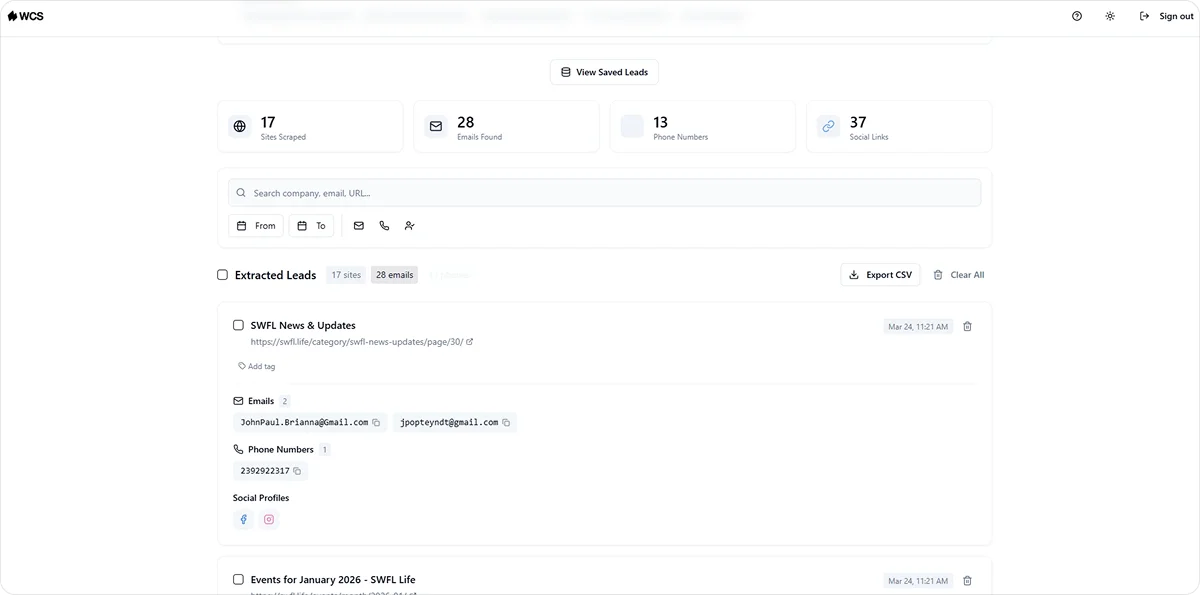
We Capture Sales's Market Miner does this through web scraping, pulling competitor activity and contact data filtered by industry and location, and delivering clean CSV exports your team can act on directly.
For teams building prospect lists from live data rather than purchased databases, web scraping for lead generation covers how that process works and which sources produce the most relevant buying signal data for B2B outreach.
5. Faster Deal Preparation Removes Internal Delays Before Every Meeting
Before every sales meeting, your team spends time locating product information, pulling case studies, reviewing account history, and preparing competitive positioning. That preparation time adds up across a full pipeline and creates internal delays that prospects never see but always feel in slower response times.
AI knowledge management gives your team instant access to accurate, source-linked internal information without hunting across shared drives or interrupting a senior colleague. Instead of spending 20 minutes searching for the most recent version of a product document, a rep queries the system and gets the answer with a source attached. They know the information is current and can verify it if needed, all before the meeting starts.
For B2B teams running AI business process automation across multiple functions, centralizing knowledge is what keeps every part of the sales cycle running from accurate, current information rather than something that may be months out of date.
6. Real-Time Pipeline Visibility Helps Your Team Act Before Deals Stall
According to LinkedIn's 2025 ROI of AI report, 69% of sellers using AI cut their sales cycles by an average of one week, and 68% say AI helps them close more deals.
A deal that has not moved in two weeks is not necessarily lost. The problem is that without visibility into which deals are losing momentum, your team finds out too late to do anything about it. AI pipeline analytics surface those signals before they become closed-lost entries:
- A contact who stopped opening emails after consistent engagement
- A deal that has been stuck in the same stage longer than your average cycle typically takes to close
- A prospect who visited your pricing page but did not respond to follow-up
Your team focuses attention on the opportunities that need it rather than reviewing the entire pipeline manually each week.
How Much Can AI Automation Shorten Your Sales Cycle
The range of outcomes depends on where in the cycle automation is applied, not just how many stages it covers. A focused reduction in your longest and most manual stage will compress the overall timeline more than spreading automation thin across every stage.
Two data points worth knowing:
- According to McKinsey, companies investing in AI across sales and marketing see a revenue uplift of 3 to 15% and a sales ROI uplift of 10 to 20%
- Teams that rebuilt their entire outbound process around AI, rather than adding tools on top of an existing workflow, saw the largest reductions
The biggest reductions come from applying automation to the stages where your team is losing the most time. If follow-up and nurturing consume the largest portion of your cycle, a significant reduction there will compress the overall timeline more than small improvements spread across every stage. Identify which stage is adding the most days to your cycle and start there.
What AI Automation Does Not Fix in Your Sales Cycle
AI automation removes friction from the repeatable parts of the sales cycle. It does not fix everything, and understanding the limits before you invest is worth doing.
Three things automation does not replace:
- A weak offer: Automating outreach on a weak offer or poor product-market fit produces more rejections faster, not more conversions. The speed of automation amplifies what is already there, good or bad
- Relationship-building at the later stages: Complex B2B deals involve negotiation, trust, and judgment that no automation tool handles. The relationship that closes the deal still needs a person behind it
- Strategic decisions: Which segments to target, which deals to prioritize, and how to position against specific competitors require context and accountability that a system cannot provide
Teams that get the most out of AI automation treat it as a system for handling execution, not a replacement for the judgment that closes deals.
How We Capture Sales Helps B2B Teams Shorten Their Sales Cycle
A long sales cycle is rarely a one-problem situation. There are several delays compounding across multiple stages, and fixing one while leaving the others manual produces limited results.
We Capture Sales builds custom AI systems where your pipeline is losing time. The process starts with a one-on-one discovery conversation that maps your current cycle, identifies which stages are creating the most delay, and determines what a practical build looks like before development begins.
Depending on where your cycle is slowest, the system addresses:
- Outreach and follow-up gaps, so engaged contacts move to a booking link or your website without your team stepping in manually
- Market intelligence, so your team reaches accounts showing buying signals before those accounts have finalized a vendor preference
- Internal knowledge access, so meeting preparation takes minutes rather than hours, hunting across drives and email threads
Every system runs in a fully isolated AWS environment. Your data never touches a public AI model, and pricing stays flat per organization regardless of team size.
For teams thinking through how to increase sales with AI automation across the full cycle, the discovery conversation is where you find out how.
Contact the We Capture Sales team to schedule a meeting today.
Frequently Asked Questions
How does AI automation reduce sales cycle length?
AI automation reduces sales cycle length by removing the delays that build up between each stage. Faster lead response, consistent follow-up, earlier identification of ready buyers, and faster internal preparation all compress the time between first contact and close. The compounding effect of addressing multiple stages produces the most significant overall reduction.
Which part of the sales cycle benefits most from AI automation?
The earliest stages produce the fastest results because that is where most delays build up. Lead response time, follow-up consistency, and qualification efficiency are where AI automation produces the most immediate return. Later stages, including negotiation and final approval, still require human involvement and benefit less from automation directly.
How long does it take to see a shorter sales cycle after implementing AI automation?
Follow-up and outreach automation typically shows results within the first few weeks because it works on contacts already in your pipeline. Prospecting and market intelligence take a little longer as your team builds familiarity with the signals the system surfaces. Starting with one stage and measuring the change before adding the next consistently produces faster, cleaner results than automating everything at once.


