





Every B2B sales team has a version of this story. A lead visits your pricing page, shows clear intent, and never hears back from you until two days later. By then, they had already booked a demo with someone who responded in under an hour. That window between intent and action is where most deals are lost, and it closes faster than any manual process can keep up with.
AI sales funnel automation closes that gap by handling the repetitive, time-sensitive steps between first contact and a closed deal. Sales organizations using AI-enabled next best actions are 2.6x more likely to achieve commercial growth, and the teams getting there are the ones with the right system in place.
This article covers what an AI sales funnel is, the stages every B2B funnel moves through, what to have in place before you automate, and 7 actionable steps to automate your AI sale funnel.
Key Takeaways
- An AI sales funnel applies machine learning to the stages that consume the most manual effort at scale: lead scoring, follow-up timing, outreach personalization, and routing qualified contacts to sales.
- The biggest funnel losses happen at predictable points: slow response after first contact, inconsistent follow-up between stages, and manual qualification that breaks down as the pipeline grows.
- Clean contact data, a defined stage model, and a measurable outcome for each stage need to be in place before any automation goes live.
- Automating one funnel stage at a time and measuring the result before adding the next produces faster, cleaner outcomes than trying to automate everything at once.
- AI handles execution. Strategy, discovery, objection handling, and relationship-building at the later stages still need a person.
What Is an AI Sales Funnel?
An AI sales funnel is a standard awareness-to-close pipeline with machine learning built into the execution. Instead of a rep manually scoring leads, chasing follow-ups, and routing warm contacts forward, the system handles all of that based on what each contact actually does.
AI Sales Funnel vs Standard Sales Funnel
Both a standard funnel and an AI funnel move through the same stages. The difference is in who does the work at each stage. In a standard funnel, a rep has to notice when a contact needs attention, qualify each lead individually, and personally route prospects forward. That works at low volume but breaks down as the pipeline grows.
An AI funnel handles that execution layer automatically. It scores contacts on entry, runs sequences based on behavior, and routes engaged prospects forward without waiting for a rep to act. Your team focuses on the conversations that actually require a person.
Here is how the two compare:
Stages of an AI Sales Funnel
Understanding how the funnel is structured before automating it helps your team identify which stage to start with and what each part is supposed to do. Here is how the stages work in a B2B context.
Top of Funnel: Awareness and Lead Capture
This is where contacts first encounter your business, whether through content, outreach, a referral, or a buying signal your team picked up. The goal at this stage is not volume but getting the right contacts into the system.
AI monitors buying signals continuously, whether that is a target account posting jobs that signal growth, a prospect visiting your website multiple times, or a competitor change that creates a timely outreach window. Contacts that enter the system get scored immediately on entry based on behavioral data and firmographic fit rather than waiting for a rep to review them.
Middle of Funnel: Qualification and Nurturing
Contacts who meet your ICP criteria move into active outreach sequences. Contacts who do not get placed into a nurture workflow that keeps them engaged until their behavior signals they are ready to move forward.
This is the stage where most manual funnels break down. A rep juggling 50 active contacts cannot reliably track who needs follow-up today, who went quiet last week, and who is showing new signals worth acting on. An AI system does all of that continuously without anyone on the team managing it.
Bottom of Funnel: Conversion and Handoff
When a contact crosses a defined engagement threshold, the system routes them directly to a booking link or your website with their full interaction history attached. No manual review, no scheduling back-and-forth, no delay while a rep finds availability.
This automatic handoff is where the time between a prospect showing intent and a conversation getting booked compresses from days to minutes.
Post-Sale: Retention and Re-Engagement
Most B2B teams treat automation as a pre-sale tool and stop there. The same systems that move contacts through the funnel can monitor product usage, flag disengagement signals early, and trigger re-engagement sequences before a customer churns or goes quiet.
A customer who has not logged in for three weeks, a contract renewal approaching without any recent activity, or a contact who stopped opening your emails after a strong start are all signals worth catching early. Catching them automatically is more reliable than relying on a rep to notice.
3 Things to Have in Place Before You Build Your AI Sales Funnel
Getting the setup right before connecting any tool saves your team significant time and frustration down the line. Here is what needs to be in place before AI sales funnel automation goes live.
Audit and Clean Your Contact Data
AI scoring and sequencing are only as reliable as the contact records they run on. Before connecting any tool, go through your existing database and remove duplicate records, fill missing fields, and verify email addresses. A system working from fragmented data produces inaccurate scores and wasted outreach regardless of how capable the tool is.
Define What Qualified Looks Like at Each Stage
AI cannot automate a handoff that has not been defined. Your team needs to agree on what makes a contact an MQL, what makes it an SQL, and what triggers a stage change before any system runs. If your team disagrees about what qualified means, automation will not resolve that disagreement. It will execute it faster.
Set a Measurable Outcome for Each Funnel Step
Defining these before deployment gives the system a target and your team a baseline to measure against:
- What does a successful first-touch sequence look like for your business?
- What response rate justifies moving a contact to the next stage?
- What engagement threshold triggers a handoff from marketing to sales?
The same discipline applies when implementing marketing automation and AI across any function: without a defined outcome, there is no way to know whether the system is working.
7 Steps to Automate Your AI Sales Funnel
These steps work best in order. Each one builds on the previous, so skipping ahead tends to create the same gaps automation is supposed to close.
1. Map Your Sales Funnel and Find Where Contacts Are Getting Lost
Before connecting any tool, write down every stage of your current sales process from first contact to closed deal. Note who does what, when they do it, and what triggers the next step. Then look for where things break down.
Ask your team these questions:
- Where do contacts stop responding?
- Which follow-ups are inconsistent or frequently missed?
- Which manual tasks consume the most rep time each week?
Those friction points are where automation produces the fastest return. A team that automates a stage already working well sees modest gains. A team that automates the stage where contacts are consistently getting lost sees an immediate difference.
2. Choose an AI Tool That Connects to Your Existing Data
The right tool is not the one with the longest feature list. It is the one that connects cleanly to your CRM and existing contact records without requiring a full data migration before anything goes live.
Before committing to any platform, confirm three things:
- It can ingest your existing CRM or CSV data, not just new contacts going forward
- It runs behavioral sequences that adapt based on what each contact does, not just fixed schedules
- It routes engaged contacts automatically rather than requiring manual review at every handoff
A system built around your existing workflows from day one produces results faster than one that requires your team to adapt to a new process before seeing any return. The same principles apply when choosing an AI tool for marketing automation that connects cleanly to your existing stack.
3. Set Up Lead Scoring So Every Contact Gets Ranked Automatically
Once your tool is connected to your data, configure it to score every contact on entry based on behavioral signals, firmographic fit, and intent. High-intent contacts get prioritized immediately. Contacts that do not yet fit your ICP stay in a nurture sequence until their behavior changes.
What to confirm before moving on: the scoring model should reflect your own historical won and lost deal data rather than generic benchmarks. The more it reflects your specific ICP, the more accurately it ranks contacts.
Getting contacts into a better starting position before scoring also helps, which is why a strong approach to turning cold contacts into active prospects pays off before automation begins.
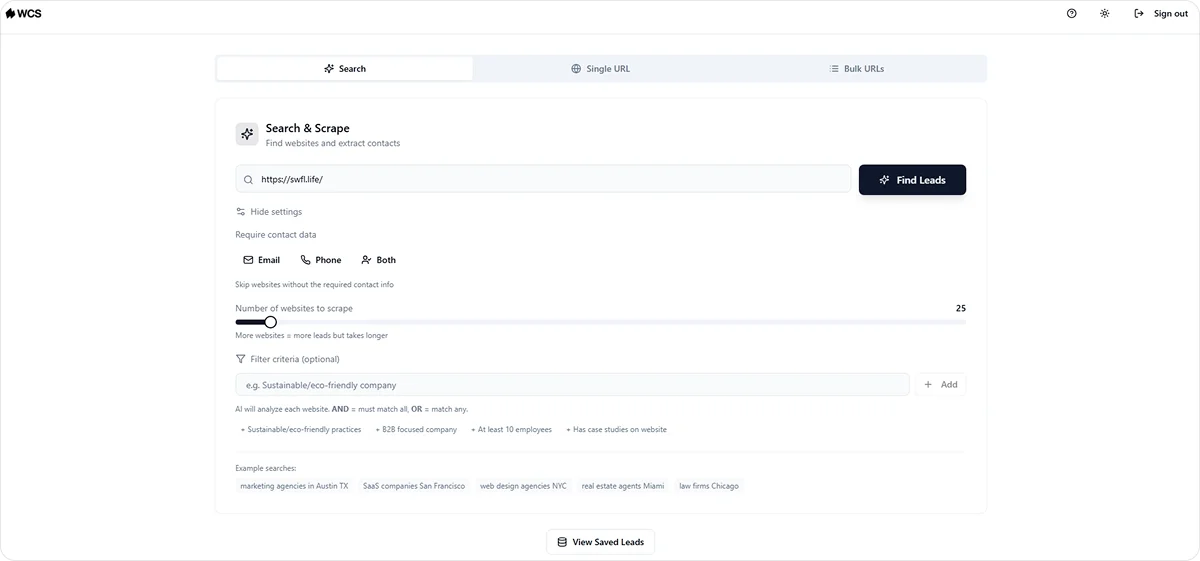
4. Build Your Prospect List From Live Market Data
A static contact list goes out of date fast. People change jobs, companies shift priorities, and a list verified six months ago may already be full of contacts who have moved on.
Rather than buying a list or building one manually, connect your funnel to a system that pulls live prospect data based on buying signals. When a target account posts jobs signaling growth, or a competitor adjusts pricing, the system surfaces relevant contacts without anyone spending hours on manual research.
We Capture Sales’s Market Miner works this way, pulling competitor activity and contact data filtered by industry and location, and delivering clean CSV exports your team can load directly into an outreach tool.
Teams building lists from live signals rather than purchased databases consistently reach the right accounts at the right moment, which is what web scraping for B2B lead generation covers in more detail.
5. Set Up Outreach Sequences That Adapt Based on Contact Behavior
Configure email and SMS sequences that fire based on what each contact does rather than a fixed schedule. A contact who visits your pricing page should hear from your team within minutes. A contact who opens three emails without clicking should get a different message from one who clicks through to a case study.
A well-configured sequence handles this branching automatically:
- A contact who opens but does not reply gets a follow-up that approaches the same message from a different angle
- A contact who clicks through to a specific page gets a follow-up relevant to what they looked at
- A contact who replies gets routed out of the automated sequence and into a direct conversation
We Capture Sales’s Pipeline Revival runs this way, ingesting your existing CRM or CSV contacts and running email and SMS sequences that adapt based on open rates and response rates. Automating follow-up sequences at this stage keeps every contact in an active workflow without your team tracking each one manually.

6. Add Nurture Content to Keep Prospects Warm Between Touchpoints
Most B2B contacts are not ready to buy when they first engage. Direct sales interactions are spaced weeks or months apart, and the gaps between them are where prospects lose interest. Nurture content keeps your brand present between those interactions without your team producing content for each channel manually every week.
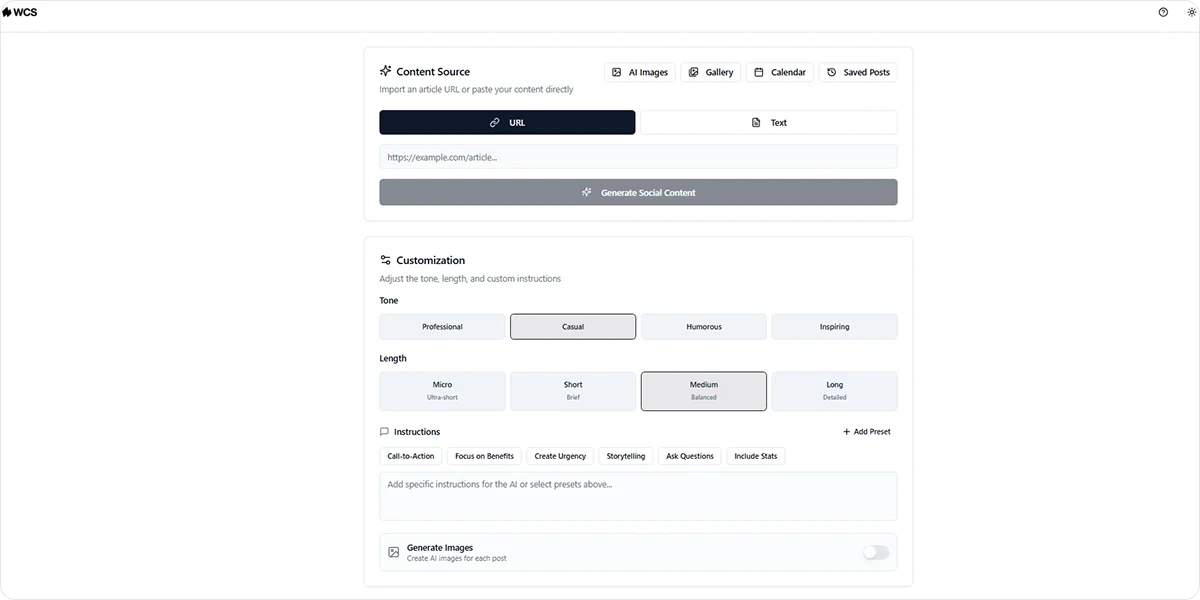
Connect a content automation tool that generates platform-specific posts from a URL or text input and organizes them into a calendar your team can review and post from.
We Capture Sales’s Social AI does this across Instagram, X, Facebook, and LinkedIn, generating branded posts with AI-produced images and relevant hashtags, organized in a content calendar your team copies and posts manually.
Staying visible between touchpoints reduces the time your team needs to warm a prospect back up before each direct sales interaction.
7. Monitor Pipeline Performance and Adjust as You Go
Once the system is live, set up pipeline monitoring that tracks deal activity and flags signals before they become lost deals. A deal that has not advanced in two weeks is not necessarily gone, but without visibility into which ones need attention, your team finds out too late to act.
Watch for these signals specifically:
- A contact who stopped engaging after consistent email opens
- A deal in the same stage longer than your average cycle typically takes to close
- A prospect who visited your pricing page but did not respond to follow-up
Review these signals monthly rather than waiting for a quarterly pipeline review. Small adjustments to scoring thresholds, sequence messaging, and routing logic tend to produce better results over time as the system processes more of your data.
Common Mistakes to Avoid When Building an AI Sales Funnel
Common Mistakes to Avoid When Building an AI Sales Funnel
Most AI sales funnel problems trace back to decisions made before the system went live, not the system itself. Four patterns show up consistently:
- Starting without clean data: A contact list full of duplicates, missing fields, and outdated records produces inaccurate scoring and wasted outreach regardless of how capable the tool is. Audit your database before connecting anything.
- Automating everything at once: When multiple tools go live simultaneously and performance drops, there is no way to identify which part caused it. Start with one stage, measure the result, then add the next.
- Skipping stage definitions: AI cannot automate a handoff that has not been defined in writing. If your team has not agreed on what qualifies a contact to move forward, the system will execute that ambiguity at scale.
- Measuring activity instead of outcomes: High email send volume with low replies is not a sign the system is working. Define three to five core metrics before launch and track them consistently from day one.
What AI Cannot Automate in Your Sales Funnel
AI automation handles volume, timing, and consistency across the funnel. Three things it does not replace are worth being clear about before you build anything.
- Discovery and objection handling: AI qualifies a contact and routes them to a conversation. What happens in that conversation, the questions your rep asks, the objections they handle, and the judgment calls they make, still requires a person.
- Strategic decisions about who to target: AI executes against an ICP your team defines. Deciding which markets to enter, which accounts to prioritize, and how to position against specific competitors requires context that a system cannot provide.
- Relationship-building at later stages: The trust that closes a complex B2B deal is built by a person, not a sequence. Automation moves contacts toward a conversation. The conversation is still entirely human.
The teams that get the most out of AI sales funnel automation are clear about this from the start. They use automation to handle execution and direct their team's attention toward the work that requires judgment.
How We Capture Sales Automates Your B2B Sales Funnel
A slow sales funnel is almost never one problem. There are several gaps compounding across multiple stages, and patching one while leaving the others manual produces limited results.
We Capture Sales builds a custom AI system around how your specific pipeline operates, covering the full funnel rather than one isolated function. Every engagement starts with a one-on-one discovery conversation that maps your current process, identifies which stages are losing contacts, and determines what the right build looks like before any development begins.
The four products map directly to the steps covered in this guide:
- Market Miner: Pulls live competitor activity and contact data filtered by industry and location, so your prospect list reflects what is happening in your market right now rather than what was compiled months ago
- Pipeline Revival: Ingests your existing CRM or CSV contacts and runs email and SMS sequences that adapt based on open rates and response rates, routing engaged prospects to a Calendly booking link or your website without manual handoff
- Social AI: Generates branded posts from a URL or text input across Instagram, X, Facebook, and LinkedIn, organized in a content calendar your team copies and posts manually, keeping your brand visible between direct sales interactions
- Knowledge Cloud: Stores your internal product information, case studies, and competitive positioning in a private AI database your team can query before any sales conversation, so meeting preparation takes minutes rather than hours
Every system runs on a fully isolated AWS environment. Your data never touches a public AI model, and pricing is per organization regardless of team size. For teams thinking through how to increase sales with AI automation across the full funnel, the discovery conversation is where that picture gets built.
Reach out to the We Capture Sales team to book a call today.
Frequently Asked Questions
How is an AI sales funnel different from a traditional automated sales funnel?
A traditional automated funnel follows fixed rules set in advance. If a contact does X, send email. It breaks when contacts behave in ways the original setup did not account for. An AI sales funnel reads what each contact does and adjusts the next step based on that behavior in real time, without anyone rebuilding the workflow every time performance shifts.
Which stage of the sales funnel benefits most from AI automation?
The middle of the funnel, where qualification and follow-up happen, produces the most immediate returns. Automating this stage produces visible results because it works on contacts already in the pipeline.
How long does it take to build an AI sales funnel?
A focused first stage covering lead scoring and outreach automation typically takes two to four weeks to deploy and another two to four weeks to stabilize. A full seven-step build runs three to six months, depending on workflow complexity. Starting with the stage where contacts are getting lost most visibly consistently produces faster results than building everything at once.


